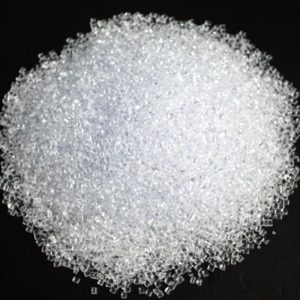
Styrene-Acrylonitrile Copolymer (referred to as SAN or AS resin) is an amorphous thermoplastic resin produced through the free-radical polymerization of styrene and acrylonitrile monomers. Compared to General Purpose Polystyrene (GPPS), SAN significantly improves the chemical resistance of the material (especially against oils, greases, and alkane solvents), surface hardness, and heat deflection temperature (typically in the range of 90–105°C) due to the presence of the acrylonitrile component. Meanwhile, this material maintains excellent transparency and high gloss, making it an ideal choice for injection-molded transparent structural parts, widely utilized in household appliances, cosmetic packaging, laboratory glassware, and automotive interior components.
For global procurement buyers and product R&D engineers, clarifying the technical routes and capacity distributions of major global manufacturers serves as the foundation for ensuring supply chain stability and product quality consistency.
Global SAN/AS Resin Producers Overview
Global SAN production capacity is primarily concentrated in the hands of integrated petrochemical enterprises equipped with upstream styrene chain integration. Below are the major manufacturers and their core brands categorized by region (in alphabetical order):
| Manufacturer | Headquarters | Core Brand / Series | Brief Market Profile |
| INEOS Styrolution | Germany | Luran® SAN | A global leader in styrene series products, possessing an extensive product line of general-purpose and high-heat resistant SAN. |
| LG Chem | South Korea | LG SAN / LUPOS® | Holds a relatively high market share in the Asian market, offering general-purpose and high-flow injection molding grades. |
| Trinseo | USA | TYRIL® SAN | Focuses on the balance between optical performance and chemical resistance, recently introducing sustainable solutions containing recycled content. |
| ChiMei | Taiwan, China | KIBISAN® / PolySAN® | One of the world’s largest ABS/SAN manufacturers, renowned for cost-effectiveness and stable, large-scale supply. |
| Formosa Plastics | Taiwan, China | Formosa SAN / AS (e.g., NV220F) | A major large-scale supplier in the Asian region, with wide applications for general-purpose injection molding grades — view our SAN (AS) resin products. |
| SABIC | Saudi Arabia | SABIC® SAN | Features a globalized distribution network, providing relevant grades that meet food contact and medical regulatory mandates. |
| Toray | Japan | Toyolac® related SAN grades | Dedicated to the field of high-performance engineering plastics, featuring strict quality control. |
| Asahi Kasei | Japan | SAN copolymer grades | Possesses a fully integrated industrial chain for styrene-based polymers. |
| KKPC | South Korea | SAN / ABS Series | Holds an important position in the Asian ABS/SAN market. |
| Sinopec / CNPC | Mainland China | Domestic SAN Brands | Primarily satisfies domestic demand, with export businesses demonstrating continuous growth. |
Note: The brand names listed above are registered trademarks of their respective companies. Availability of specific grades varies by region.
Typical Technical Indicators and Classification of SAN/AS Resins
The performance of SAN materials fluctuates with variations in acrylonitrile (AN) content; generally, a higher AN content yields superior chemical resistance and heat deflection temperatures, though the processing window narrows.
- Density: 1.06–1.08 g/cm³ (ISO 1183)
- Tensile Strength: 65–80 MPa
- Heat Deflection Temperature (1.82 MPa): 85–105°C
- Light Transmittance: >88–90% (Transparent Grade)
- Mold Shrinkage: Approx. 0.3–0.7%
Commercial grades are typically classified into: General Purpose Grade (GP-SAN), suitable for daily commodities and ordinary packaging; High Heat Grade, used for home appliance components and automotive interiors; and Food Contact/Medical Grade, which must comply with regulatory requirements such as FDA 21 CFR or EU 10/2011.
Injection Molding Processing Guide
Since SAN exhibits a degree of hygroscopicity, pre-drying treatment prior to processing is vital to prevent silver streaks, bubbles, or a reduction in transparency.
- Drying Conditions: 80–90°C for 2–4 hours; it is recommended to control residual moisture content below 0.05%.
- Melt Temperature: 200–260°C (the lower limit is recommended for thick-walled products).
- Mold Temperature: 40–70°C.
- Injection Speed: Medium to high speeds are recommended to achieve excellent surface gloss.
Prolonged residence time at excessively high temperatures must be avoided to prevent thermal degradation of the material, which leads to yellowing.
B2B Procurement Selection Criteria
When choosing a SAN/AS resin supplier, professional B2B buyers typically focus on the following core elements:
- Grade Matching: Acrylonitrile content directly impacts chemical resistance and haze; Melt Flow Rate (MFR) and heat deflection temperature must be verified based on the application scenario.
- Documentation Completeness: Ensure that every batch of cargo can be provided with a TDS (Technical Data Sheet), MSDS/SDS (Material Safety Data Sheet), and COA (Certificate of Analysis).
- Compliance Certification: If food contact or electrical/electronic applications are involved, compliance with REACH, RoHS, and Specific Migration Limits (SML) must be confirmed.
- Supply Stability: Priority should be given to suppliers maintaining bonded warehouses or routine spot inventories within the target region, who are well-versed in International Commercial Terms (Incoterms) to secure delivery lead times.
- Traceability: The engineering plastics supply chain demands rigorous batch management, ensuring that any issues can be traced back to the production source.
As a professional engineering plastics supply chain service provider, we select premium SAN/AS resins from mainstream global manufacturers to provide customers with stable supply sources and technical support.