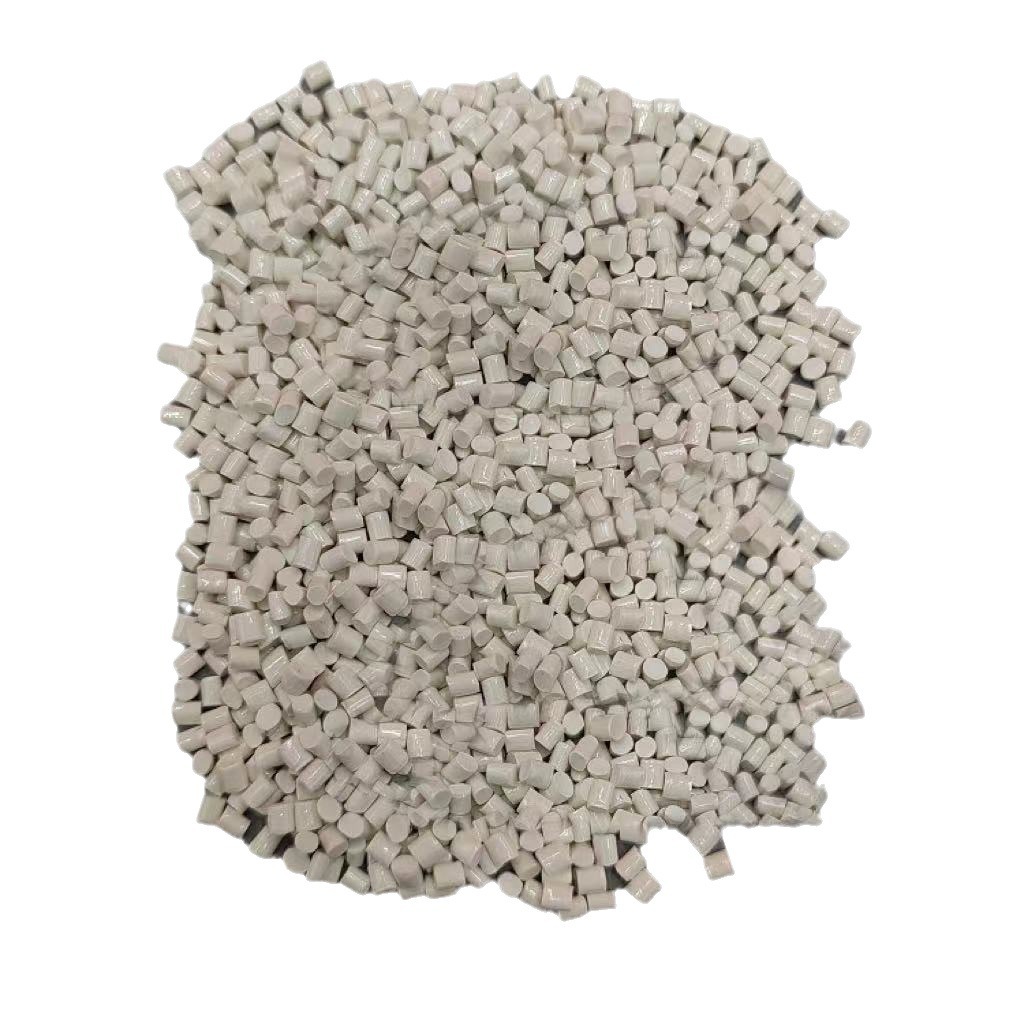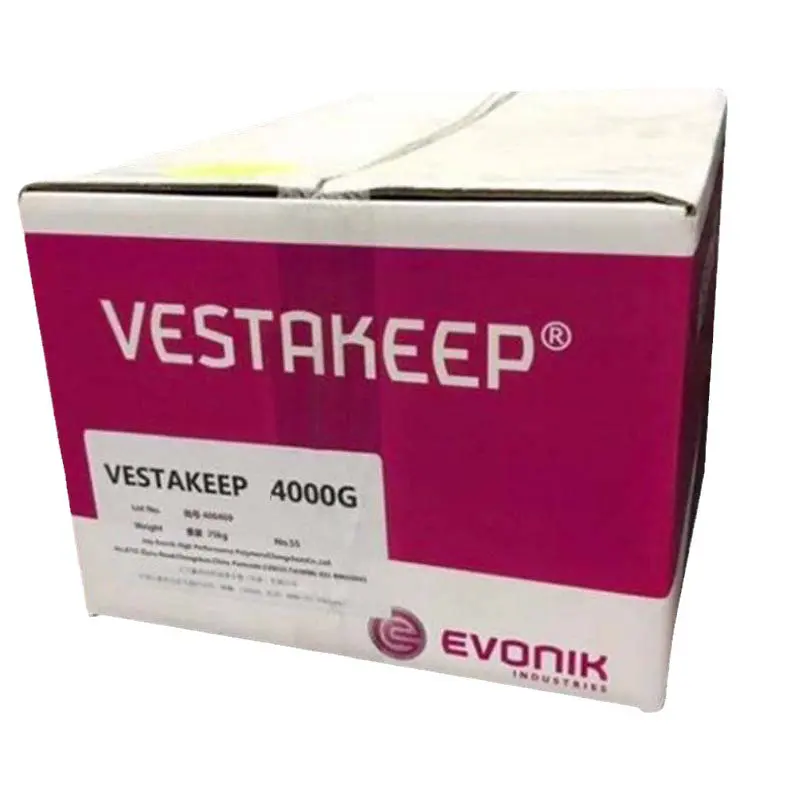
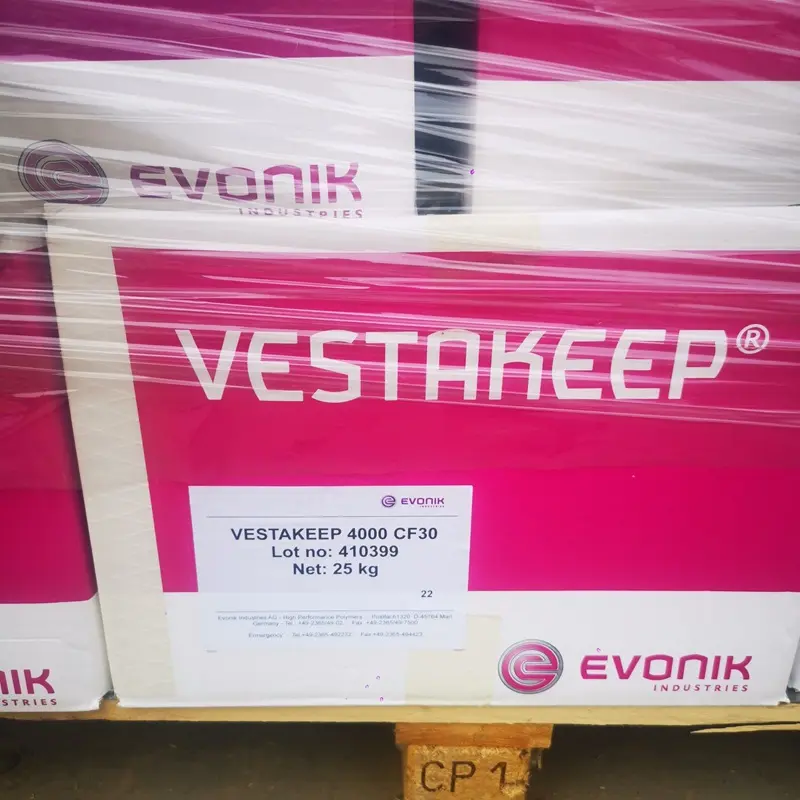
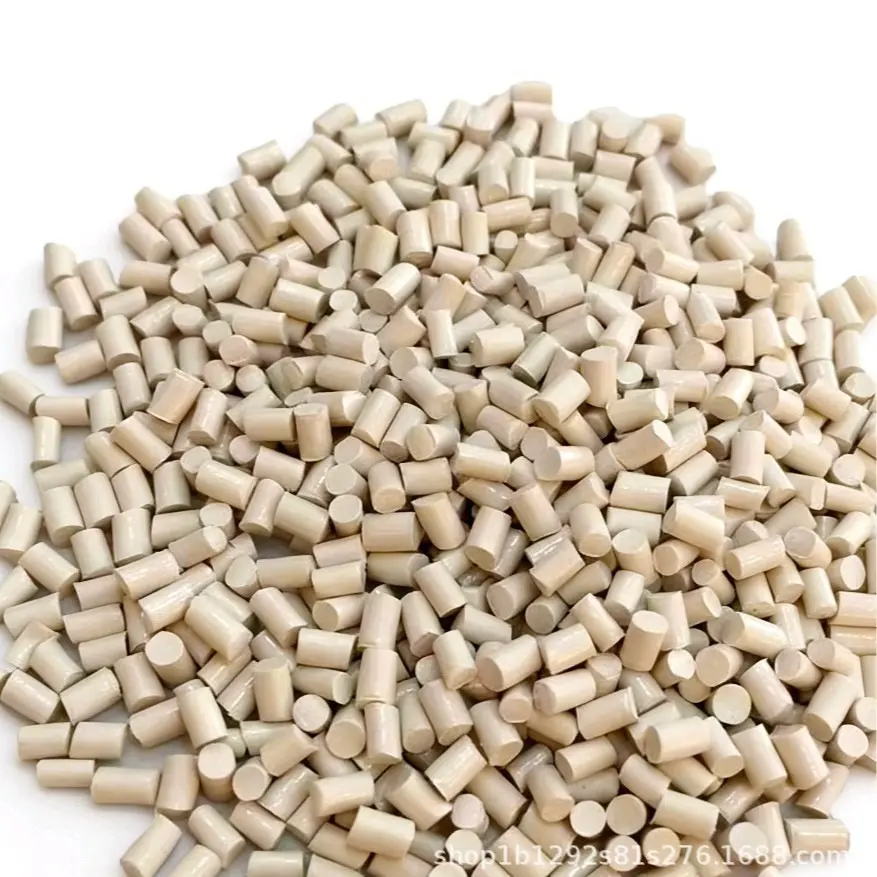
Evonik VESTAKEEP® 4000G: a high-viscosity unfilled PEEK granule for injection molding and extrusion, used in automotive, medical and electrical parts.
| Manufacturer | Evonik |
|---|---|
| Density | 1.30 g/cm³ |
| MVR | 11 cm³/10 min |
| Tensile Strength at Yield | 96 MPa |
| Elongation at Yield | 5 % |
Note: See the product description for additional technical specifications
VESTAKEEP® 4000G is an unfilled polyetheretherketone (PEEK) granule introduced by Evonik for high-end engineering applications, positioned as a general-purpose grade in the higher-viscosity range of the PEEK (polyetheretherketone) family. The material is a semi-crystalline thermoplastic containing no glass-fiber or carbon-fiber reinforcement, and therefore retains the matrix resin’s toughness, dielectric insulation and chemical inertness while offering an exceptionally high thermal ceiling: a melting point of approximately 340 °C and Vicat softening temperatures of 305 °C (Method B) / 335 °C (Method A), leaving substantial safety margin for high-temperature service.
Process compatibility is the core value of this grade. The manufacturer recommends a melt temperature of 370–380 °C and a mold temperature of 160–200 °C (preferably 180 °C) for injection molding; its relatively high melt viscosity also delivers stable performance in extrusion (rod, tube, sheet and profile), making it one of the few unfilled PEEK grades that works across both injection molding and extrusion.
Industry positioning: The VESTAKEEP® brand stands alongside VICTREX® and KetaSpire® as one of the mainstream supply brands in the global PEEK market. As the representative material for “metal-to-plastic conversion,” PEEK has a density of only 1.30 g/cm³ (about 1/2 that of aluminum and 1/6 that of steel), yet can operate long-term under temperatures above 250 °C, aggressive chemical media and high loads — which is precisely why 4000G is widely used to replace precision parts made of copper, aluminum and stainless steel. As a global polymer raw material supplier with more than 20 years of experience, ZiJun Plastics supports PEEK materials with original TDS, MSDS and batch COA documentation, and accommodates small-lot sample verification.
| Physical Properties | Test Value | Test Unit | Test Standard |
| Density (23 °C) | 1.30E+00 | g/cm³ | ISO 1183 |
| Melt Volume-Flow Rate (380 °C, 5 kg) | 1.10E+01 | cm³/10 min | ISO 1133 |
| Mold Shrinkage, Transverse (2 mm) | 1.1 | % | ISO 294-4 |
| Mold Shrinkage, Parallel (2 mm) | 9.00E-01 | % | ISO 294-4 |
| Mechanical Properties | Test Value | Test Unit | Test Standard |
| Tensile Modulus | 3.50E+03 | MPa | ISO 527-2 |
| Tensile Strength, Yield | 9.60E+01 | MPa | ISO 527-2 |
| Tensile Strain, Yield | 5 | % | ISO 527-2 |
| Tensile Strain, Break | 3.00E+01 | % | ISO 527-2 |
| Charpy Notched Impact Strength, Complete Break (-30 °C) | 6 | kJ/m² | ISO 179 1eA |
| Charpy Notched Impact Strength, Complete Break (23 °C) | 7 | kJ/m² | ISO 179 1eA |
| Charpy Unnotched Impact Strength (-30 °C) | No Break | — | ISO 179 1eU |
| Charpy Unnotched Impact Strength (23 °C) | No Break | — | ISO 179 1eU |
| Thermal Properties | Test Value | Test Unit | Test Standard |
| Vicat Softening Temperature | 3.05E+02 | °C | ISO 306/B |
| Vicat Softening Temperature | 3.35E+02 | °C | ISO 306/A |
| Melting Point (2nd heating) | 340 | °C | ISO 11357-3 |
| Coefficient of Linear Thermal Expansion (CTE), Parallel (23–55 °C) | 6.00E-05 | cm/cm/°C | ISO 11359-2 |
| Flammability Rating (3.2 mm) | V-0 | — | UL 94 |
| Glow-Wire Flammability Index (GWFI) (2 mm) | 960 | °C | IEC 60695-2-12 |
| Glow-Wire Ignition Temperature (GWIT) (2 mm) | 825 | °C | IEC 60695-2-13 |
| Electrical Properties | Test Value | Test Unit | Test Standard |
| Surface Resistance | 1.00E+14 | ohms | IEC 60093 |
| Volume Resistivity | 1.00E+15 | ohms·cm | IEC 60093 |
| Dielectric Strength (K20/P50.0) | 16 | kV/mm | IEC 60243-1 |
| Dielectric Constant (50 Hz) | 2.80E+00 | — | IEC 60250 |
| Dielectric Constant (1.0e+6 Hz) | 2.8 | — | IEC 60250 |
| Comparative Tracking Index (CTI), Test Solution A | 200 | V | IEC 60112 |
| Comparative Tracking Index (CTI), Test Solution A (100 drops value) | 175 | V | IEC 60112 |
The technical data sheet (TDS) of VESTAKEEP® 4000G PEEK material from Evonik corporation, if there are differences, please refer to the official website of Evonik.
Q1: Does VESTAKEEP® 4000G need drying before processing? What injection molding parameters are recommended?
Yes. Although PEEK has very low moisture absorption, granules still adsorb trace moisture on their surface in humid environments; feeding them directly into a barrel above 370 °C can cause silver streaks, bubbles and polymer chain degradation through hydrolysis. Recommended practice: use a desiccant (dehumidifying) dryer at 150–160 °C for 3–4 hours (adjust the duration according to ambient humidity and equipment capability).
For molding parameters, Evonik recommends a melt temperature of 370–380 °C and a mold temperature of 160–200 °C (preferably 180 °C) for 4000G; a high mold temperature helps achieve sufficient crystallinity and thereby stabilizes mechanical strength and dimensional accuracy. For drying, mold temperature control and troubleshooting of common defects with unfilled PEEK, see our technical article “Drying and Mold Temperature Control for Unfilled PEEK“. Optimal parameters vary with the machine and part geometry, so a mold trial is recommended before mass production.
Q2: How should VESTAKEEP® 4000G be selected compared with other unfilled PEEK grades?
The key difference is melt viscosity: 4000G is a higher-viscosity grade with lower flowability than low-viscosity grades (1000/2000 series). For thin-walled parts, long flow-length ratios or fine micro-features, low-viscosity grades should be evaluated first; for thick-walled parts and extruded profiles, or where higher melt strength and impact toughness are required, 4000G has the advantage. The following is a comparable side-by-side reference between this page’s data and a comparable grade on our site (both are typical values from each supplier’s published TDS):
| Comparison Item | VESTAKEEP® 4000G (Evonik) | VICTREX® PEEK 450G (Victrex) |
| Viscosity positioning | High viscosity, unfilled, injection molding + extrusion | Standard flow (medium viscosity), unfilled, injection molding + extrusion |
| Density | 1.30 g/cm³ | 1.30 g/cm³ |
| Tensile modulus | 3500 MPa | 4000 MPa |
| Tensile strength (yield) | 96 MPa | 98 MPa |
| Tensile strain (break) | 30 % | 45 % |
| Notched Charpy impact (23 °C) | 7 kJ/m² | 7 kJ/m² |
| Melting point | 340 °C | 343 °C |
| Flammability rating | UL 94 V-0 (3.2 mm) | UL 94 V-0 |
| CTI | 200 V | 150 V |
| Mold shrinkage (parallel) | 0.9 % | 0.9 % |
As the comparison shows, the two are broadly equivalent in density, impact strength and shrinkage; 450G is slightly higher in tensile modulus and elongation at break, and its flowability better suits thin-walled precision injection molding, while 4000G reaches a CTI of 200 V, giving it an edge in electrical parts that are sensitive to tracking. Final selection should still be based on part service conditions, mold structure and cost; you can review the full property table of VICTREX® PEEK 450G on our site for an item-by-item comparison.
Q3: Does VESTAKEEP® 4000G meet UL, RoHS and other compliance requirements? Can it be used in food contact or medical applications?
Q4: In cross-border procurement, how can I confirm that VESTAKEEP® 4000G is genuine original material and keep procurement costs under control?
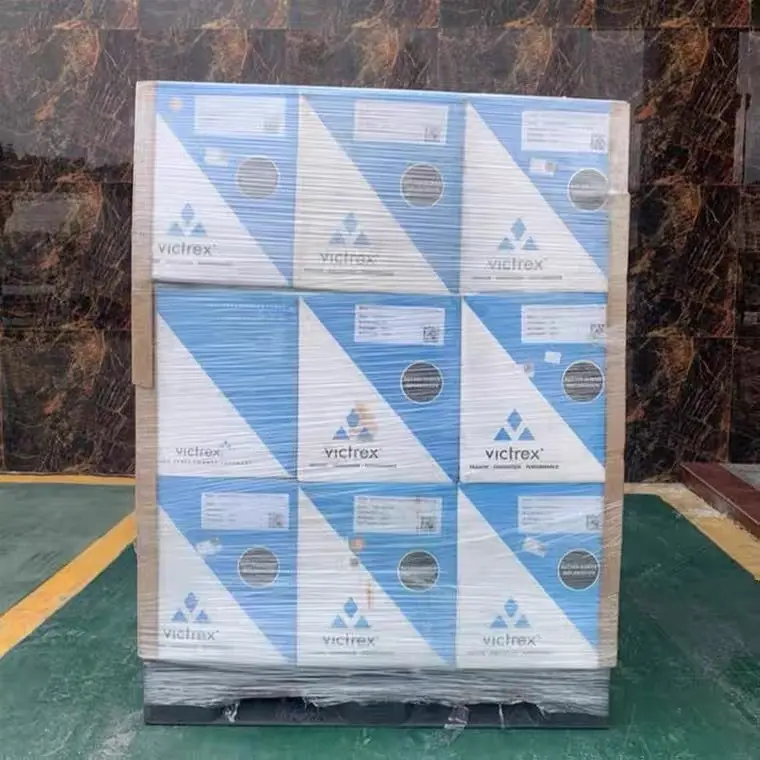
A three-step verification is recommended: ① Packaging and labelling — original material is supplied in 25 kg boxes with moisture-proof PE liners, and the packaging labels, batch numbers and original documents must be consistent; ② Closed documentation loop — obtain the original TDS, MSDS and batch COA, and check whether easily re-testable indicators such as density (1.30 g/cm³) and MVR (11 cm³/10 min at 380 °C/5 kg) match the batch’s measured values; ③ Small-lot validation — run sample injection molding and re-test key properties before committing to long-term supply.
PEEK is a high-unit-price specialty engineering plastic whose price is markedly influenced by crude oil, monomer costs and plant maintenance cycles, so procurement cadence and inventory strategy have a significant effect on cost. For the current price range and supply outlook, see our market analysis “2026 PEEK Resin Prices and Supply Trends“; for samples of 4000G, volume quotations or alternative grade recommendations, please contact our technical sales team.
Submit your inquiry today and receive a professional competitive price tailored to your project requirements.