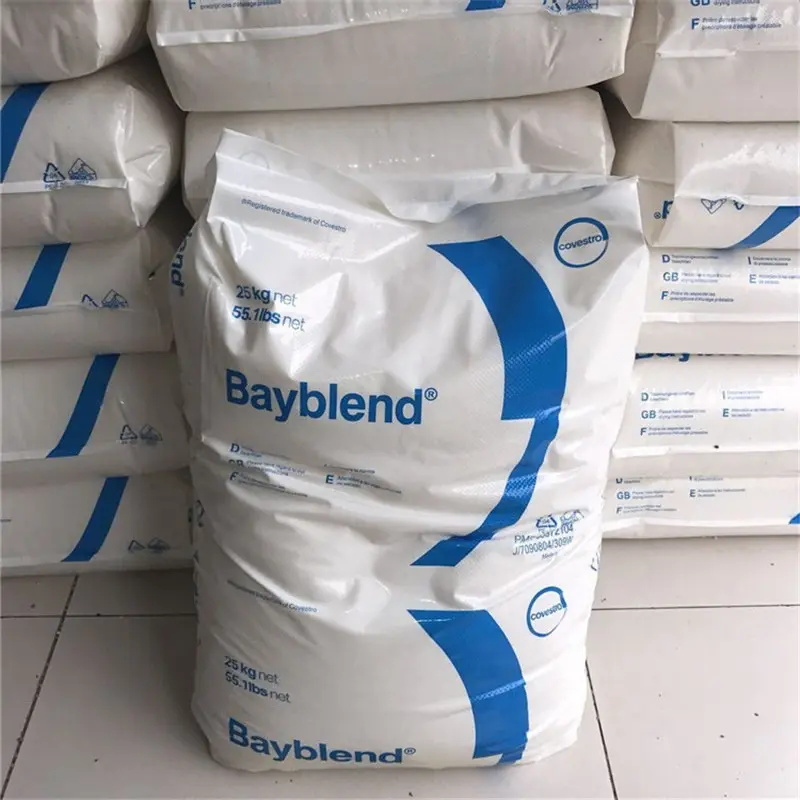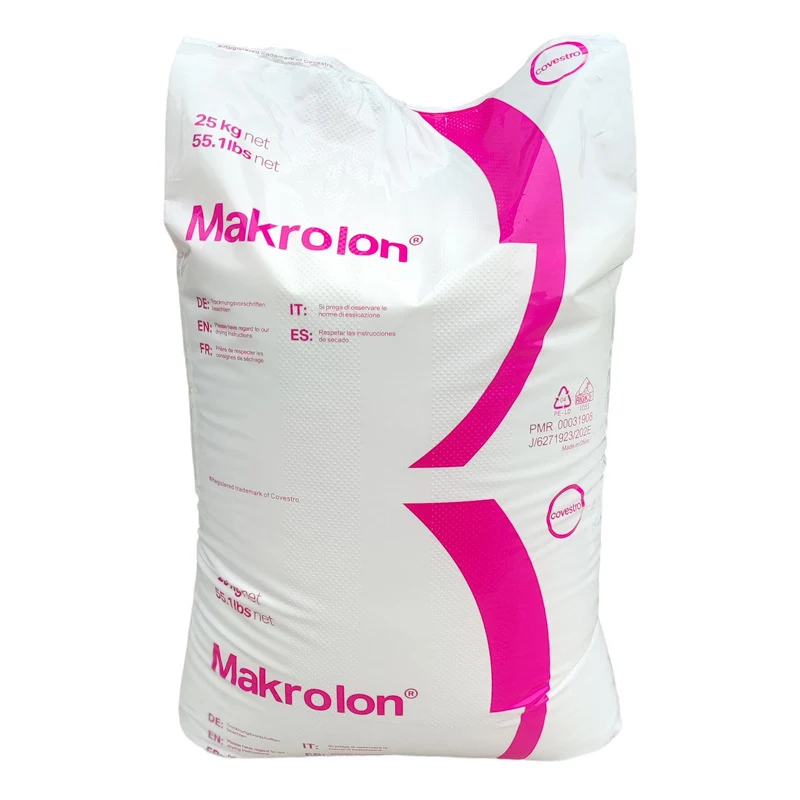
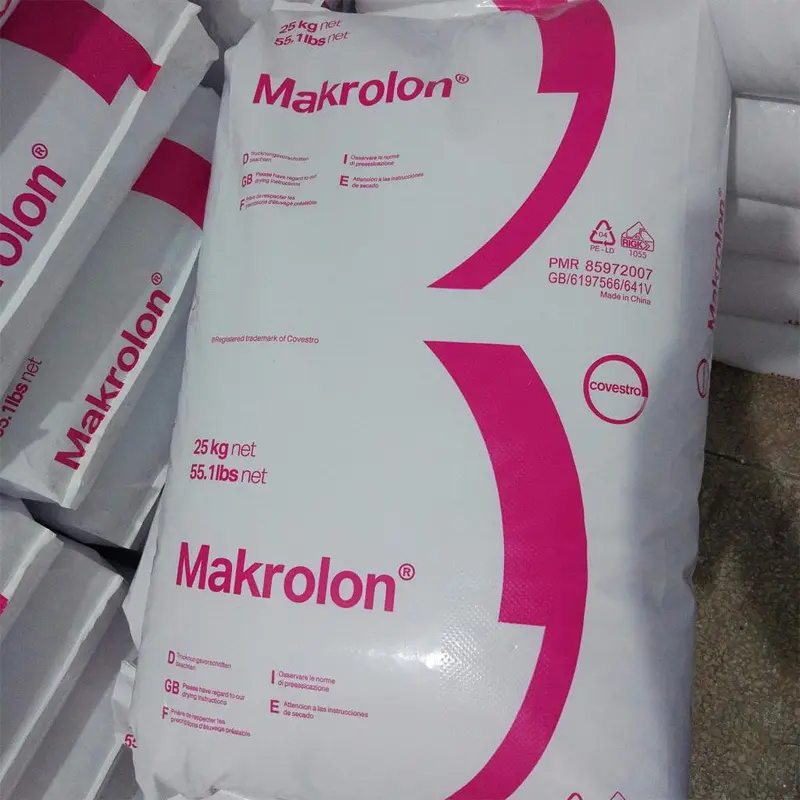
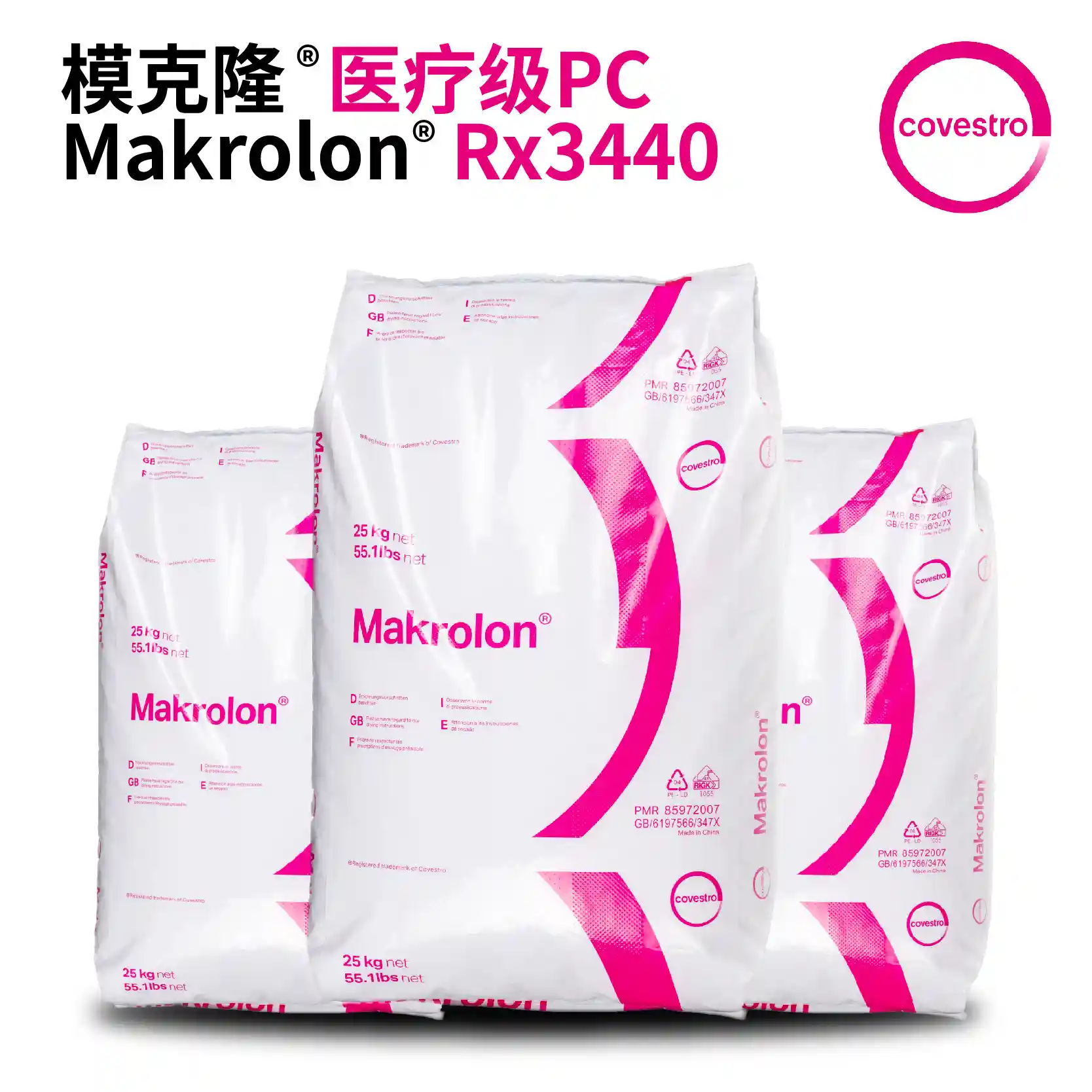
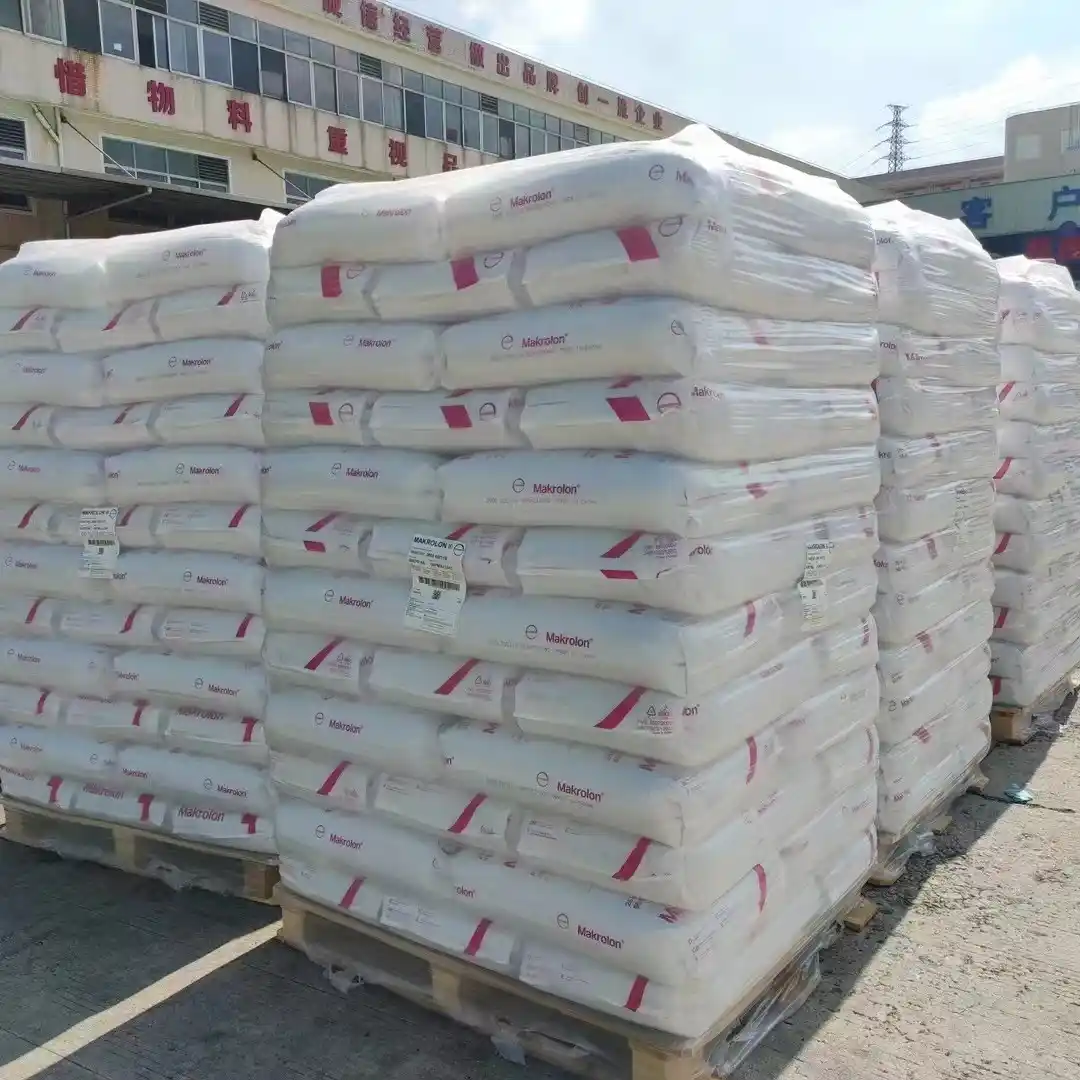
Premium Covestro Makrolon 2805 PC polycarbonate resin in high-purity pellets. Features superior optical clarity and transparency for injection molding.
| Manufacturer | Covestro |
|---|---|
| Density | 1.20 g/cm³ |
| MVR | 10 g/10min |
| Tensile Strength at Yield | 66.0 MPa |
| Tensile Strength at Break | 70.0 MPa |
Note: See the product description for additional technical specifications
Covestro Makrolon® 2805 PC is a premium polycarbonate plastic raw material resin manufactured by Covestro, a globally leading polymer producer. In its physical appearance, the material is supplied as high-performance, high-purity pellets exhibiting exceptionally outstanding high transparency and optical clarity.
As a star product within the Makrolon® family, the 2805 grade enjoys an esteemed reputation across the international plastics processing industry. It is a medium viscosity, easy release, general-purpose injection molding resin. This grade successfully balances melt processability with mechanical strength, offering an excellent processing window for intricate mold designs. Due to its superior comprehensive properties, Makrolon® 2805 is widely utilized in demanding industrial manufacturing sectors requiring precise dimensional accuracy and high impact resistance.
| Property | Value | Unit | Test Standard |
| Density (23 °C) | 1.2 | g/cm³ | ISO 1183 |
| Apparent Density | 0.66 | g/cm³ | ISO 60 |
| Melt Mass-Flow Rate (MFR) (300 °C, 1.2 kg) | 10 | g/10min | ISO 1133 |
| Melt Volume-Flow Rate (MVR) (300 °C, 1.2 kg) | 9 | cm³/10 min | ISO 1133 |
| Molding Shrinkage, Normal | 0.60-0.80 | % | ISO 2577 |
| Molding Shrinkage, Parallel | 0.60-0.80 | % | ISO 2577 |
| Molding Shrinkage, Normal (2 mm, 500 bar, 60x60x2mm, 280 °C) | 0.7 | % | ISO 294-4 |
| Molding Shrinkage, Parallel (2 mm, 500 bar, 60x60x2mm) | 0.65 | % | ISO 294-4 |
| Water Absorption, Saturation (23 °C) | 0.3 | % | ISO 62 |
| Water Absorption, Equilibrium (50% RH, 23 °C) | 0.12 | % | ISO 62 |
| Ball Indentation Hardness | 115 | MPa | ISO 2039-1 |
| Water Vapor Transmission Rate (85% RH, 100 µm, 23 °C) | 15 | g/m²/24h | ISO 15106-1 |
| Gas Permeability, Carbon Dioxide (25.4 µm, 23 °C) | 16900 | cm³/(m²·bar·24h) | ISO 2556 |
| Property | Value | Unit | Test Standard |
| Tensile Modulus (1 mm/min, 23 °C) | 2400 | MPa | ISO 527-2/1 |
| Tensile Stress at Yield (50 mm/min, 23 °C) | 66 | MPa | ISO 527-2/50 |
| Tensile Stress at Break (50 mm/min, 23 °C) | 70 | MPa | ISO 527-2/50 |
| Tensile Strain at Yield (50 mm/min, 23 °C) | 6.2 | % | ISO 527-2/50 |
| Tensile Strain at Break (50 mm/min, 23 °C) | 130 | % | ISO 527-2/50 |
| Nominal Tensile Strain at Break (50 mm/min, 23 °C) | > 50 | % | ISO 527-2/50 |
| Tensile Creep Modulus (1 h) | 2200 | MPa | ISO 899-1 |
| Tensile Creep Modulus (1.0e+3 h) | 1900 | MPa | ISO 899-1 |
| Flexural Modulus (2 mm/min, 23 °C) | 2400 | MPa | ISO 178 |
| Flexural Strength (2 mm/min, 23 °C) | 97 | MPa | ISO 178 |
| Flexural Stress (2 mm/min, 3.5% strain, 23 °C) | 73 | MPa | ISO 178 |
| Flexural Strain at Flexural Strength (2 mm/min, 23 °C) | 7.1 | % | ISO 178 |
| Gas Permeability, Carbon Dioxide (100 µm) | 3800 | cm³/(m²·bar·24h) | ISO 2556 |
| Gas Permeability, Nitrogen (25.4 µm) | 510 | cm³/(m²·bar·24h) | ISO 2556 |
| Gas Permeability, Nitrogen (100 µm) | 120 | cm³/(m²·bar·24h) | ISO 2556 |
| Gas Permeability, Oxygen (25.4 µm) | 2760 | cm³/(m²·bar·24h) | ISO 2556 |
| Gas Permeability, Oxygen (100 µm) | 650 | cm³/(m²·bar·24h) | ISO 2556 |
| Charpy Notched Impact Strength, Complete Break (-30 °C, 3 mm) | 16 | kJ/m² | ISO 179 1eA |
| Charpy Notched Impact Strength, Partial Break (23 °C, 3 mm) | 75 | kJ/m² | ISO 179 1eA |
| Charpy Unnotched Impact Strength (-60 °C) | No Break | — | ISO 179 1eU |
| Charpy Unnotched Impact Strength (-30 °C) | No Break | — | ISO 179 1eU |
| Charpy Unnotched Impact Strength (23 °C) | No Break | — | ISO 179 1eU |
| Izod Notched Impact Strength, Complete Break (-30 °C, 3 mm) | 15 | kJ/m² | ISO 180/1A |
| Izod Notched Impact Strength, Partial Break (23 °C, 3 mm) | 70 | kJ/m² | ISO 180/1A |
| Multi-Axial Instrumented Impact Test, Total Energy (-30 °C) | 65 | J | ISO 6603-2 |
| Multi-Axial Instrumented Impact Test, Total Energy (23 °C) | 60 | J | ISO 6603-2 |
| Multi-Axial Instrumented Impact Test, Peak Force (-30 °C) | 6300 | N | ISO 6603-2 |
| Multi-Axial Instrumented Impact Test, Peak Force (23 °C) | 5400 | N | ISO 6603-2 |
| Property | Value | Unit | Test Standard |
| Deflection Temperature Under Load, Unannealed (0.45 MPa) | 137 | °C | ISO 75-2/B |
| Deflection Temperature Under Load, Unannealed (1.8 MPa) | 125 | °C | ISO 75-2/A |
| Glass Transition Temperature (Tg) (10 °C/min) | 145 | °C | ISO 11357-2 |
|
Vicat Softening Temperature
|
144 | °C | ISO 306 / B50 |
| 146 | °C | ISO 306 / B120 | |
| Ball Pressure Test (136 °C) | Pass | — | IEC 60695-10-2 |
| Coefficient of Linear Thermal Expansion, Parallel (23 – 55 °C) | 6.50E-05 | cm/cm/°C | ISO 11359-2 |
| Coefficient of Linear Thermal Expansion, Normal (23 – 55 °C) | 6.50E-05 | cm/cm/°C | ISO 11359-2 |
| Thermal Conductivity, Through-Plane (23 °C) | 0.2 | W/m-K | ISO 8302 |
| Relative Thermal Index (RTI), Electrical (1.5 mm) | 125 | °C | UL 746 |
| Relative Thermal Index (RTI), Impact (1.5 mm) | 115 | °C | UL 746 |
| Relative Thermal Index (RTI), Strength (1.5 mm) | 125 | °C | UL 746 |
| Flammability Classification (2.5 mm) | HB | — | UL 94 |
| Flammability Classification (0.75 mm) | V-2 | — | UL 94 |
| Glow Wire Flammability Index (GWFI) (0.75 mm) | 850 | °C | IEC 60695-2-12 |
| Glow Wire Flammability Index (GWFI) (1.5 mm) | 850 | °C | IEC 60695-2-12 |
| Glow Wire Flammability Index (GWFI) (3.0 mm) | 930 | °C | IEC 60695-2-12 |
| Glow Wire Ignition Temperature (GWIT) (0.75 mm) | 875 | °C | IEC 60695-2-13 |
| Glow Wire Ignition Temperature (GWIT) (1.0 mm) | 875 | °C | IEC 60695-2-13 |
|
Glow Wire Ignition Temperature (GWIT) (1.5 mm)
|
875 | °C | IEC 60695-2-13 |
| 750 | °C | EDF HN60 E.02 | |
|
Glow Wire Ignition Temperature (GWIT) (3 mm)
|
900 | °C | IEC 60695-2-13 |
| 750 | °C | EDF HN60 E.02 | |
| Limiting Oxygen Index (LOI), Procedure A | 28 | % | ISO 4589-2 |
| Response to Small Igniting FlameMethod K & F | K1 – F1 | — | DIN 53438-1 |
| Burning RateThickness > 1 mm | passed | — | ISO 3795 |
| Flash Ignition Temperature | 480 | °C | ASTM D1929 |
| Self-Ignition Temperature | 550 | °C | ASTM D1929 |
| Needle Flame Test, Method F (1.5 mm) (Permissible Burning Time) | 1 | min | IEC 60695-11-5 |
| Needle Flame Test, Method F (1.5 mm) (Flame Application Time) | 0.1 | min | IEC 60695-11-5 |
| Needle Flame Test, Method F (2.0 mm) (Permissible Burning Time) | 1 | min | IEC 60695-11-5 |
| Needle Flame Test, Method F (2.0 mm) (Flame Application Time) | 0.1 | min | IEC 60695-11-5 |
| Needle Flame Test, Method K (3.0 mm) (Permissible Burning Time) | 0.2 | min | IEC 60695-11-5 |
| Needle Flame Test, Method K (3.0 mm) (Flame Application Time) | 2 | min | IEC 60695-11-5 |
| Property | Value | Unit | Test Standard |
| Surface Resistivity | 1.00E+16 | ohms | IEC 60093 |
| Volume Resistivity (23 °C) | 1.00E+14 | ohms · cm | IEC 60093 |
| Electric Strength (23 °C, 1 mm) | 34 | kV/mm | IEC 60243-1 |
| Relative Permittivity (100 Hz, 23 °C) | 3.1 | — | IEC 60250 |
| Relative Permittivity (1.0E+6 Hz, 23 °C) | 3 | — | IEC 60250 |
| Dissipation Factor (100 Hz, 23 °C) | 5.00E-04 | — | IEC 60250 |
| Dissipation Factor (1.0E+6 Hz, 23 °C) | 9.00E-03 | — | IEC 60250 |
| Comparative Tracking Index (CTI)Test Liquid A | 250 | V | IEC 60112 |
| Comparative Tracking Index (CTI)Test Liquid B | 125 | V | IEC 60112 |
| Property | Value | Unit | Test Standard |
| Electrolytic Corrosion (23 °C) | A1 | — | IEC 60426 |
| Property | Value | Unit | Test Standard |
| Refractive Index | 1.586 | — | ISO 489 |
| Luminous Transmittance (1 mm) | 89 | % | ISO 13468-2 |
| Luminous Transmittance (2 mm) | 89 | % | ISO 13468-2 |
| Luminous Transmittance (3 mm) | 88 | % | ISO 13468-2 |
| Luminous Transmittance (4 mm) | 87 | % | ISO 13468-2 |
| Haze (3 mm) | < 0.800 | % | ISO 14782 |
Exceptional Optical Clarity & Luminous Transmittance: Makrolon® 2805 boasts a high light transmittance of nearly 89% and an extremely low haze level (<0.800%), enabling a crystal-clear aesthetic perfect for optical-grade transparent components.
Superb Impact Resistance & Mechanical Strength: Representing a benchmark in polycarbonates, its flexural strength reaches up to 97 MPa, demonstrating superior shatterproof and drop-resistant characteristics at room temperature, which effectively minimizes breakage rates of finished products.
High Heat Deflection Temperature & Thermal Stability: With a Vicat softening point as high as 144-146 °C, the material ensures molded parts maintain excellent rigidity without creeping or warping under elevated operating temperatures.
Outstanding Processability & Easy Mold Release: Specially formulated with an efficient release agent, it drastically shortens production cycles and lowers defect rates, even in complex mold structures or thin-walled injection molding applications.
Excellent Dimensional Stability: The molding shrinkage is tightly and consistently maintained between 0.60% and 0.80%, effectively suppressing post-molding warpage and ensuring the assembly precision of critical tolerances.
Consumer Electronics & Electrical Enclosures: Thanks to its superb insulation performance (surface resistivity of 1.0E+16 ohms) and outstanding flame retardancy (complying with UL 94 V-2), it is widely utilized in high-end smartphone housings, charger casings, smart meter boxes, and lighting fixture accessories.
Automotive Industry Components: In precision automotive manufacturing, it is used for high-transparency headlamp lenses, instrument cluster lenses, interior transparent trims, and structural parts requiring high heat resistance and impact performance.
Non-Contact Medical Devices: Leveraging its pure resin base and excellent physical properties, it can be applied to certain medical instrument housings and display panels that do not require direct pharmaceutical contact.
Consumer Goods & Industrial Components: Its high transparency makes it an excellent choice for manufacturing high-grade water bottles, durable transparent containers, premium toys, and precision sight glasses.
Q1: Does Covestro Makrolon® 2805 PC require pre-drying prior to injection molding? What are the recommended drying parameters?
A1: Yes, polycarbonate (PC) is highly sensitive to moisture. If the resin contains excess moisture, it will undergo hydrolysis under high processing temperatures, leading to silver streaks (splay marks) on the product surface and severely degraded impact properties. It is recommended to pre-dry the pellets at 120 °C for 2 to 4 hours using a dehumidifying dryer, ensuring the moisture content is controlled below 0.02% before molding.
Q2: Compared to PMMA (acrylic), which is also highly transparent, what are the distinct advantages of Makrolon® 2805?
A2: While both materials deliver brilliant luminous transmittance close to 90%, their core mechanical profiles are completely different. PMMA is inherently brittle, has poor impact resistance, and shatters easily; whereas Makrolon® 2805 PC is famously known as “bulletproof plastic,” offering impact strength and drop resistance far superior to PMMA. Furthermore, the heat resistance of Makrolon® 2805 (Vicat softening temperature around 145 °C) is significantly higher than that of PMMA (typically under 100 °C), making it better suited for electrical environments prone to temperature spikes.
Q3: Does this material comply with international environmental and flame-retardant standards such as RoHS or UL 94?
A3: Yes, Covestro’s Makrolon® series products satisfy strict global environmental regulations including RoHS and REACH upon factory release. In terms of flame retardancy, according to the technical data sheet and UL 94 standards, this grade achieves a V-2 flammability rating at a thin wall thickness of 0.75 mm, and an HB rating at 2.5 mm thickness, meeting the compliance standards for the vast majority of electronic product protective enclosures.
Submit your inquiry today and receive a professional competitive price tailored to your project requirements.