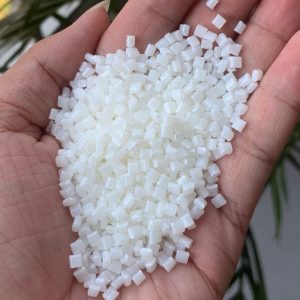
In the fields of modern engineering plastics and polymer modification (Polymer Blends & Alloys), Polycarbonate / Acrylonitrile Butadiene Styrene alloy (PC/ABS) represents one of the most successful examples of polymer blending technology.
By precision shear-blending non-crystalline PC (Polycarbonate) resin with amorphous ABS (Acrylonitrile Butadiene Styrene) resin at a macromolecular level, PC/ABS alloys successfully establish an outstanding synergistic balance among mechanical strength, thermal performance, and processing rheological behavior. This unique combination of properties makes it an indispensable high-performance engineering plastic across the automotive, consumer electronics, medical device, and electrical and electronic (E&E) industries worldwide.
Macromolecular Property Synergistic Mechanism
To truly grasp the physical and engineering performance of PC/ABS, one must analyze the complementary mechanism of its two base resins at the property level:
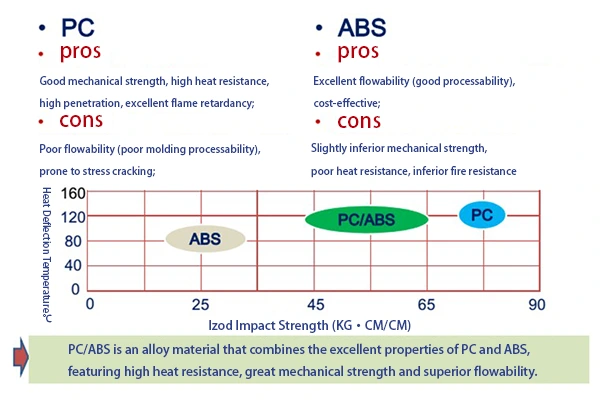
- Property Contributions of PC (Polycarbonate): Imparts high melt viscosity, extreme rigidity, superior impact strength (especially at ambient and medium temperatures), and an excellent Heat Deflection Temperature (HDT).
- Property Contributions of ABS (Acrylonitrile Butadiene Styrene): The presence of the butadiene elastomer (rubber phase) effectively reduces the notch sensitivity of PC molecular chains and mitigates internal stress cracking defects. Concurrently, the styrene and acrylonitrile components grant the alloy excellent melt flowability (low melt viscosity) and a good foundation for chemical resistance.
The direct macroscopic manifestation of this synergistic effect is that it overcomes the high notch sensitivity and processing difficulties of pure PC, while substantially upgrading the heat resistance and tensile rigidity of pure ABS.
Analysis of Core Physical and Mechanical Properties of PC/ABS Alloys
Typically, depending on the blending ratio of PC to ABS (with PC content generally varying between 50% and 85%) and the inclusion of modifying additives (such as flame retardants, compatibilizers, and glass fibers), the characteristic physical property profile of PC/ABS exhibits the following scientific traits:
Exceptional Impact Strength and Low-Temperature Toughness
The most prominent property advantage of PC/ABS lies in its extremely high Notched Izod Impact Strength.
- Ambient Temperature Performance: At 23 °C, premium PC/ABS alloys can reach a notched impact strength of 500 – 800 J/m, displaying a distinct ductile fracture profile that resists brittle shattering when subjected to sudden external impacts.
- Low-Temperature Behavior: In extreme cold environments ranging from -30 °C to -40 °C, certain cold-resistant modified grades of PC/ABS still maintain a high ductile-to-brittle transition point. This holds decisive engineering value for automotive bumpers and exterior trim components.
Balanced Rigidity and Tensile Behavior
- Tensile Strength: Typical values are maintained between 55 – 70 MPa, while the Flexural Modulus generally falls within the range of 2000 – 2800 MPa.
- This ensures that finished molded parts exhibit outstanding dimensional stability and creep resistance when enduring continuous flexural loads.
Significantly Enhanced Heat Deflection Temperature (HDT)
The heat deflection temperature of pure ABS rarely exceeds 90 °C, but with the introduction of the PC component:
- Under a high load test of 1.82 MPa, the Heat Deflection Temperature (HDT) of standard PC/ABS alloys typically sits between 100 °C and 130 °C.
- This thermal property guarantees that the material can be safely used for electrical and electronic enclosures that require internal heat dissipation or must endure elevated environmental temperatures.
Optimized Processing Rheological Properties (Melt Flowability)
- Pure PC has an extremely low melt flow index, making it highly prone to generating high internal molded stress when forming complex, thin-walled, or large injection-molded parts. The Melt Volume-Flow Rate (MVR / MFI) of PC/ABS is remarkably optimized, reducing injection pressure and shear stress while maintaining high mechanical properties, which vastly broadens the processing window.
Typical Technical Specifications of PC/ABS Grades
To assist engineers in property comparison, the typical physical property ranges for industrial-grade general-purpose (unfilled/non-FR) and flame-retardant (FR) PC/ABS alloys are compiled below:
| Property | General Purpose | Flame Retardant | Test Standard |
| Density | 1.12 – 1.15 g/cm3 | 1.18 – 1.20 g/cm3 | ISO 1183 / ASTM D792 |
| Melt Volume-Flow Rate (MVR)260 °C, 5.0 kg | 12 – 22 cm3/10min | 15 – 30 cm3/10min | ISO 1133 / ASTM D1238 |
| Tensile Strength | 55 – 65 MPa | 60 – 70 MPa | ISO 527 / ASTM D638 |
| Elongation at Break | 40% – 80% | 25% – 50% | ISO 527 / ASTM D638 |
| Flexural Modulus | 2300 – 2600 MPa | 2600 – 3000 MPa | ISO 178 / ASTM D790 |
| Notched Izod Impact Strength23 °C, 3.2mm | 50 – 70 kJ/m2 | 40 – 55 kJ/m2 | ISO 180 / ASTM D256 |
| Heat Deflection Temperature (HDT)1.80 MPa, Unannealed | 105 °C – 115 °C | 90 °C – 100 °C | ISO 75 / ASTM D648 |
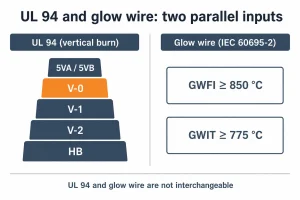
| Flammability | HB | V-0 (1.5mm / 0.75mm) | UL 94 |
Critical Limitations and Vulnerability Behavior Analysis
In a rigorous engineering evaluation of resin raw materials, mastering the limitations of a material is just as critical as understanding its advantages:
- Environmental Stress Cracking (ESC) Sensitivity: PC/ABS is highly sensitive to polar organic solvents such as ketones, esters, certain aromatic hydrocarbons, and strong alkalis. These small molecules readily penetrate the interfacial phases of the resin blend, triggering Environmental Stress Cracking (ESC) when the material is subjected to internal molded stress or external loads.
- UV Sensitivity and Aging: When exposed long-term to natural sunlight or high-intensity ultraviolet light, the unsaturated butadiene double bonds in the ABS component easily undergo thermal-oxidative degradation. Macroscopically, this causes the molded parts to suffer from yellowing, embrittlement, and a loss of surface gloss. Therefore, PC/ABS intended for outdoor use must be compounded with sufficient hindered amine light stabilizers (HALS) or antioxidants.
- Hydrolytic Sensitivity and Moisture Risk: Because the PC component contains ester bonds, moisture trapped inside the resin will catalyze hydrolysis under high-temperature and high-humidity melting states during processing. This leads to a precipitous drop in molecular weight, causing embrittlement of the injection-molded parts. Consequently, strict pre-drying (such as desiccant drying at 80 °C – 100 °C for 3-4 hours) is an essential processing prerequisite to preserve its physical properties.
Property-Driven Inter-Industry Industrial Applications
The engineering characteristics of PC/ABS directly dictate its core selection logic in high-value B2B industrial products:
- Automotive Applications: Utilizing its high impact rigidity, low-temperature flexibility, low odor, and low volatile organic compound (VOC) emissions, it is widely used to manufacture automotive instrument panel structures, center console bezels, door handles, radiator grilles (requiring electroplating-grade modification), and crash-resistant exterior trim.
- Consumer Electronics: Benefiting from the excellent lightweight properties, rigidity, and V-0 non-flammability of flame-retardant PC/ABS (formulated with halogen-free eco-friendly flame retardant systems), it stands as the standard specified material for smartphone housings, laptop enclosures, tablet back covers, wireless routers, and premium smart home control panels.
- Electrical Appliances: Leveraging its high heat deflection temperature and good dielectric strength, it is widely utilized in smart utility meter housings, EV charging gun enclosures, circuit breaker panels, and various industrial switch boxes.
Conclusion
In summary, PC/ABS alloys organically unify the heat resistance and high toughness of PC with the excellent processing flowability of ABS through advanced physical blending technology. In the process of plastic raw material selection, the properties of PC/ABS can be highly tailored by precisely calibrating the resin ratios and additive packages, meeting the stringent requirements for structural rigidity, impact resistance, and regulatory compliance across diverse high-end manufacturing sectors worldwide.