China PS Resin Raw Material Price Guide (Updated May 2026)
ZiJun Plastics Engineering Team
Why China is a Vital Source for PS Resin Raw Materials
China has emerged as one of the world’s largest producers and exporters of polystyrene (PS) resin, spanning General Purpose Polystyrene (GPPS) and High Impact Polystyrene (HIPS). In recent years, with the successive commissioning of multiple new plants, China’s PS resin supply capacity has continued to strengthen.
New Capacity: The Sinopec Guangxi Refining & Chemical integrated project’s 300,000 tons/year PS plant has achieved commercial production and passed verification by major downstream clients.
Breakthroughs in High-End Products: Sinopec Guangxi Refining & Chemical has mass-produced optical-grade GPPS-550N, a grade characterized by high light transmittance and high thermal stability, suitable for LED displays, light guide plates, premium packaging, and household appliances.
Joint Venture Brand Advantages: Joint ventures like BASF-YPC Company Limited manufacture classic grades such as GPPS 158K in strict accordance with international quality standards to supply the global market.
Diversified Supplier Ecosystem: A multi-tiered, high-quality production echelon has formed, ranging from large state-owned petrochemical enterprises (Sinopec, PetroChina) to foreign-invested and joint-venture enterprises (Zhenjiang Chimei, Ningbo Formosa Plastics, BASF-YPC) and key private enterprises.
Leveraging expanding capacity, consistent quality, and competitive pricing, China has become a primary procurement destination for the global PS resin market.
Current China PS Resin Market Prices (Mid-May 2026)
According to the latest market monitoring data from multiple agencies including Mysteel Oilchem and Plasway, Chinese domestic GPPS and HIPS prices showed a moderate downward trend in mid-May 2026. Below are the latest market quotes for mainstream grades from major Chinese petrochemical producers (excluding Xinghui Environmental Technology data):
GPPS Resin Prices
Manufacturer
Grade
Price (RMB/Ton)
Data Date
Region / Remarks
Zhenjiang Chimei
PG-33
12,600
May 15, 2026
Delivered to Yuyao market
BASF-YPC
158K
11,600
May 15, 2026
Delivered to Yuyao market
Ningbo Formosa
535N
11,200
May 18, 2026
Delivered to Ningbo market
Ningbo Formosa
550N
11,200
May 18, 2026
Delivered to Ningbo market
Shanghai Secco
123P
10,400–10,800
May 13, 2026
Delivered to North China market
Guangzhou Petrochemical
525
9,700–10,200
May 9, 2026
Ex-warehouse from Dongguan market
PetroChina Dushanzi
500
10,100
May 13, 2026
Ex-warehouse from North China market
Tianjin Rentai
133
11,300
May 13, 2026
Ex-warehouse from North China market
Fujian Tianyuan
635
10,150
May 18, 2026
Delivered to Ningbo market
HIPS Resin Prices
Manufacturer
Grade
Price (RMB/Ton)
Data Date
Region / Remarks
Zhenjiang Chimei
PH-88
13,400–13,700
May 15, 2026
Delivered to Yuyao market
Shanghai Secco
622P
11,800–12,000
May 13, 2026
Delivered to North China market
Guangzhou Petrochemical
660
10,520–11,200
May 9, 2026
Ex-warehouse from Dongguan market
Ningbo Formosa
8250
12,600+
May 18, 2026
Reference price for Ningbo market
Note: The above prices represent market quotes as of the respective publication dates from various data sources. List prices refer to official factory list prices (inclusive of VAT), while market reference prices denote quotes from local traders on either a delivered or ex-warehouse basis. Actual transaction prices fluctuate based on order volume, payment terms, delivery conditions, and market volatility.
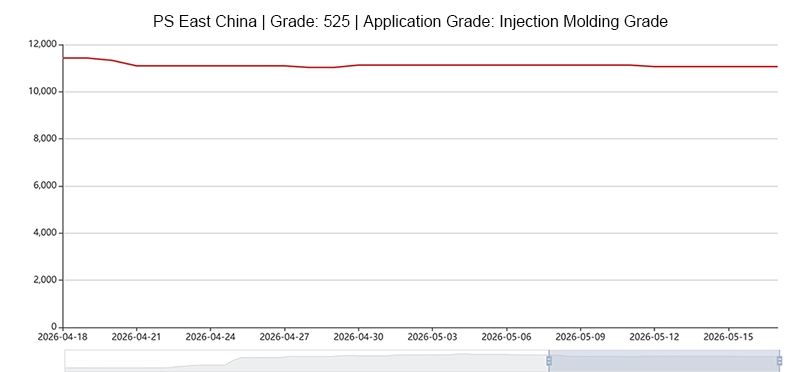
Observation of current market data indicates that mainstream Chinese GPPS resin prices gradually retreated from the 11,200–11,400 RMB/ton range in early April to the 10,400–10,500 RMB/ton range in mid-May (calculated by mainstream transaction prices), reflecting a monthly decline of roughly 4–5%. Distinct pricing tiers persist among different manufacturers due to brand positioning, product quality, and regional market variances—Zhenjiang Chimei’s PG-33 is quoted near 12,600 RMB/ton and BASF-YPC’s 158K sits around 11,600 RMB/ton, whereas economic grades like Guangzhou Petrochemical’s 525 and PetroChina Dushanzi’s 500 fall into the 9,700–10,200 RMB/ton range. This high-to-low price spread underscores the marked influence of brand premiums, performance discrepancies, and certification tiers on pricing. Global buyers can select the most suitable suppliers within these price bands according to their specific application demands.
Data Source Description: The price information above is compiled from market reports published in early and mid-May 2026 by multiple market monitoring agencies including Mysteel Oilchem, Plasway, and Hithink RoyalFlush Information Network. Because PS resin market conditions shift frequently, buyers are advised to contact suppliers directly for real-time quotes during inquiries.
China PS Resin Price Trend Analysis (April–May 2026)
Overall Trend: From April to mid-May 2026, Chinese PS resin prices experienced a sustained softening. The primary drivers behind this trend include:
A volatile downward correction in raw material styrene prices;
Downstream demand recovery falling short of market expectations;
A cyclical slowdown in Chinese export orders.
Short-Term Forecast: According to analyses from institutions like CITIC Futures, Chinese GPPS resin prices are projected to fluctuate within the 9,600–12,600 RMB/ton range in the coming weeks. Concurrently, HIPS prices are anticipated to run within the 11,400–14,000 RMB/ton range, heavily contingent upon styrene costs, international oil prices, and downstream inventory replenishment cycles.
Core Factors Influencing Chinese PS Resin Prices
Global buyers evaluating Chinese PS resin prices must closely track the following variables:
Styrene Monomer Cost
Styrene is the critical feedstock for PS resin, accounting for over 90% of production costs. Following the Spring Festival in 2026, Chinese styrene prices surged from roughly 7,500 RMB/ton to a peak of 11,132 RMB/ton, before correcting downward to the current 8,000–8,500 RMB/ton range. Every fluctuation in styrene prices directly propagates to the PS resin end.
International Crude Oil Prices and Geopolitics
Geopolitical tensions in the Middle East and structural risks around the Strait of Hormuz have kept international oil prices sustained above 100 USD/barrel. Sustained high oil prices drive up costs across the aromatics value chain, establishing a firm cost floor for Chinese PS resin.
Domestic Supply and Demand Dynamics in China
China’s PS production capacity continues to scale up: over the past five years, the compound annual growth rate (CAGR) of PS output reached 9.10%, with the growth rate spiking to 14.29% in 2023. Continuous expansions by producers—including Sinopec, Zhenjiang Chimei, Ningbo Formosa Plastics, and BASF-YPC—have bolstered supply availability, exerting structural resistance against upward price spikes.
Export Trade Flows
China has transformed rapidly from a net importer to a net exporter of styrene. In the first quarter of 2026, styrene exports reached 114,800 tons, primarily flowing to South Korea, India, and Europe. An increase in styrene exports can trim local feedstock availability, thereby indirectly impacting local PS resin pricing.
Major Chinese PS Resin Manufacturers and Brands
Manufacturer
Capacity Profile
Core Products & Applications
Quality Frameworks
Zhenjiang Chimei (CHIMEI)
One of China’s leading PS production bases
GPPS (PG-33), HIPS (PH-88, etc.); widely applied in home appliances, office equipment, toys, and daily housewares
ISO 9001, UL, Food-contact compliance
BASF-YPC (BASF-YPC)
Fully integrated PS production
GPPS 158K (high clarity, heat resistant), HIPS 158L, etc.; compliant with BASF’s global quality standards
ISO 9001, ISO 14001, FDA/EU food-contact compliance
Ningbo Formosa (TAIRILITE)
Large-scale PS manufacturing facilities
GPPS (535N, 550N), HIPS (8250); utilized in electronics, home appliances, and packaging
GPPS (123P), HIPS (622P); supplying East China and international export markets
ISO 9001, ISO 14001
Sinopec Guangzhou Petrochemical
Major PS production hub in South China
GPPS (525), HIPS (660); serving global markets with the Pearl River Delta as its core
ISO 9001, Food-contact compliance
PetroChina Dushanzi Petrochemical
Major petrochemical base in Northwest China
GPPS (500); supplying North China as well as Central Asian and European markets
ISO 9001
Tianjin Rentai
PS production enterprise in North China
GPPS (133); serving northern domestic and export markets
ISO 9001
Fujian Tianyuan
PS production enterprise in South China
GPPS (635); export-oriented model
ISO 9001
Note: The above information is compiled from public records. Specific capacities and product configurations may adjust over time; please verify via official corporate announcements.
Practical Guide for Global Procurement
If you intend to procure PS resin raw materials from China, the following workflow and recommendations will help execute your transactions efficiently and safely.
Pre-Procurement Preparation
Confirm Real-Time Pricing: Due to frequent price adjustments in the Chinese PS resin market, always confirm the spot price for the day via WeChat, email, or telephone before finalizing a purchase order.
Specify Technical Requirements: Define whether your application requires GPPS or HIPS, and furnish explicit material property metrics (MFR, impact strength, HDT, clarity, etc.).
Select Verified Suppliers: Prioritize manufacturing enterprises certified to ISO 9001 and ISO 14001 standards to secure consistent lot-to-lot stability.
Lead Time: Typically 2–6 weeks, depending heavily on order size and plant scheduling.
Cost-Saving Opportunities
Compared to equivalent optical-grade GPPS imported from Japan or South Korea, Chinese-manufactured optical-grade GPPS (e.g., Sinopec Guangxi Refining & Chemical’s GPPS-550N) is priced approximately 8%–12% lower. Furthermore, local supply shipping transit times from China to Southeast Asian destinations average only 2–3 weeks, compared to 6–8 weeks from alternative global suppliers, reducing inventory cycle times.
Frequently Asked Questions (FAQ)
Q1: What is the current average price for GPPS resin in China?
As of mid-May 2026, the factory/delivered average price for GPPS resin in China hovers around 10,400–10,500 RMB/ton (mainstream transaction price). However, pricing varies noticeably by brand: premium brands like Zhenjiang Chimei’s PG-33 sit around 12,600 RMB/ton, mid-tier options like BASF-YPC’s 158K stand near 11,600 RMB/ton, and economic grades like Guangzhou Petrochemical’s 525 trade in the 9,700–10,200 RMB/ton range. Actual purchasing costs vary based on volume, payment terms, and delivery configurations.
Q2: How can I procure PS resin raw materials from China?
Procurement can be managed through several main channels:
Direct engagement with manufacturers (via industry trade shows or official channels)
B2B digital platforms (Alibaba, Made-in-China, etc.)
Retaining Chinese trading firms to act as sourcing agents
Attending major industry exhibitions, such as Chinaplas (International Exhibition on Plastics and Rubber Industries)
Q3: What documents are necessary to import PS resin from China?
Standard documentation includes: Commercial Invoice, Packing List, Bill of Lading, Certificate of Origin, Certificate of Analysis (COA), MSDS, quality management system certificates, and compliance declarations (REACH, RoHS), alongside market-specific mandates (e.g., BIS, EAC).
Q4: Does Chinese-manufactured PS resin comply with food-contact safety standards?
Yes, multiple Chinese producers (such as Zhenjiang Chimei, BASF-YPC, Ningbo Formosa Plastics, Shanghai Secco, and Guangzhou Petrochemical) supply GPPS/HIPS grades that fully satisfy EU 10/2011, FDA 21 CFR 177.1640, and China’s GB 4806.6 frameworks. Request the corresponding compliance certificates for your specific production lots from the supplier.
Q5: How can I verify product quality prior to purchasing?
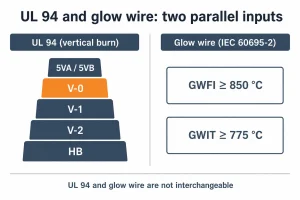
You can request free material samples from the supplier to run evaluation testing via independent third-party laboratories. Simultaneously, inspect their ISO certifications, factory audit records, and historical supply credentials. For flame-retardant grades, verify the official UL Yellow Card.
Q6: What is the recent trend in the Chinese PS resin market?
Near-term prices are expected to continue tracking fluctuations in styrene feedstock costs and international oil markets. GPPS is projected to swing between 9,600–12,600 RMB/ton, while HIPS is likely to run between 11,400–14,000 RMB/ton. Importers are encouraged to track styrene trends, Chinese export mandates, and downstream warehouse stock levels.
Q7: What payment methods do Chinese suppliers typically accept?
Mainstream payment structures include: Telegraphic Transfer (T/T, typically structured as a 30% advance deposit + 70% payable against Bill of Lading copy), Letter of Credit (L/C at sight or usance), and Documents Against Payment (D/P). Commercial clauses are subject to mutual agreement.
Q8: How can I track real-time changes in Chinese PS resin prices?
It is advisable to subscribe to data feeds from specialist industrial intelligence agencies (such as Mysteel Oilchem, Plasway, or SCI International), follow the list price movements of major petrochemical producers, and maintain regular communication with your Chinese supply network.
Summary and Recommendations
The Chinese PS resin market has transformed into one of the most competitive supply hubs worldwide. Growing aggregate capacity, the arrival of optical-grade additions, and competitive pricing frameworks make China a necessary destination for international procurement portfolios.
Key Takeaways Review:
Current Price Ranges: GPPS 9,700–12,600 RMB/ton (broad variance based on brand and tier); HIPS 10,500–13,700 RMB/ton
Mainstream Transaction Bands: GPPS around 10,400–10,500 RMB/ton; HIPS around 11,200–12,000 RMB/ton (factory/delivered, VAT inclusive)
Price Trajectory: Overall downward softening across April and May, with index corrections averaging 4–8%
Primary Cost Variables: Styrene monomer values, global crude benchmarks, Chinese export volumes, downstream purchasing demand
Sourcing Strategy: Secure real-time spot validation, run sample validation, confirm complete regulatory compliance files, and build structured, long-term supply relationships
For the latest spot quotes or technical support regarding Chinese PS resin grades, contact the manufacturers listed above or their authorized distribution networks directly.
ZiJun Plastics Engineering Team
With 20+ years of expertise in global polymer procurement and application, we specialize in high-performance thermoplastics (PC, ABS, POM, etc.). Our team combines deep technical knowledge of injection molding and material properties to provide manufacturers with precise, efficient material solutions and expert market insights.