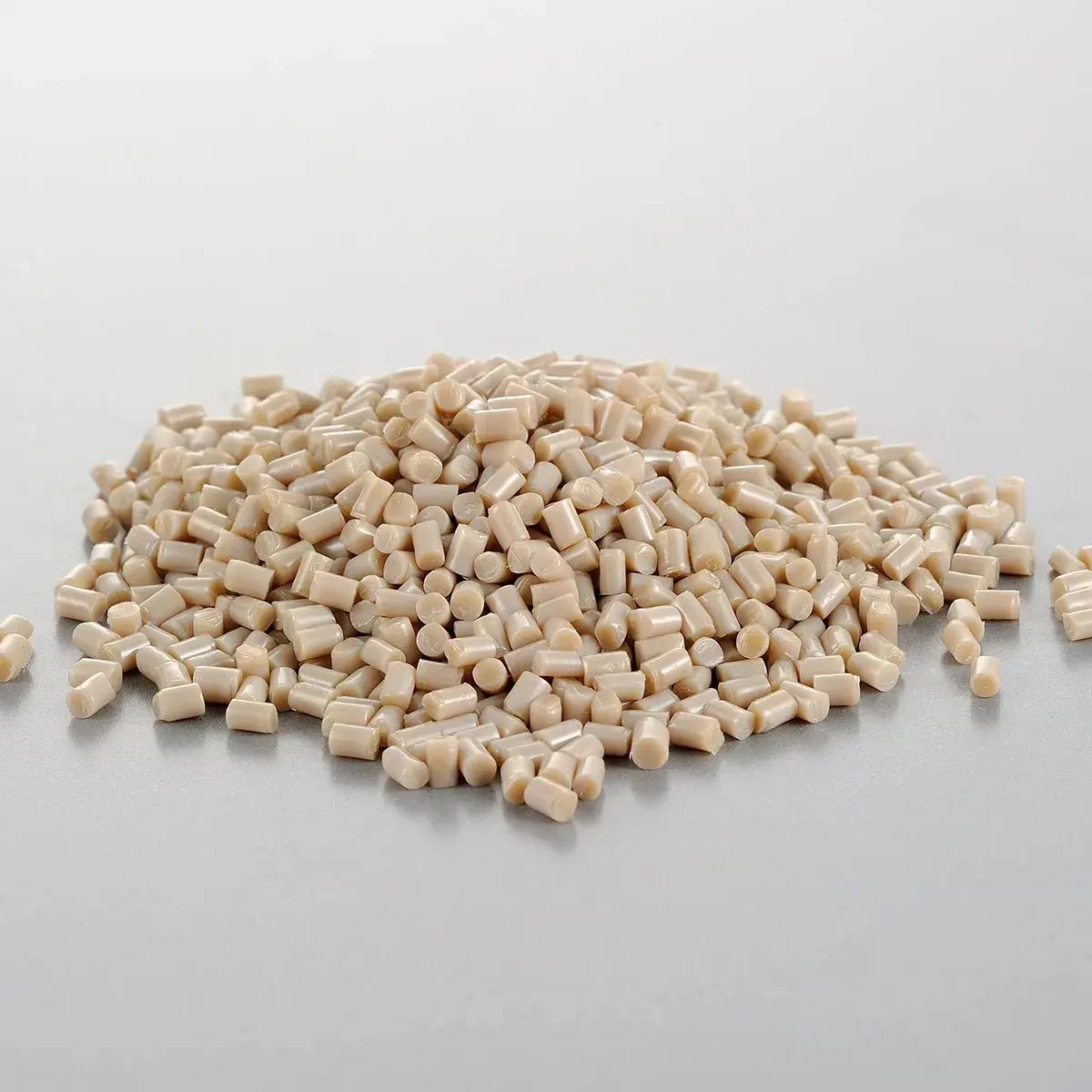
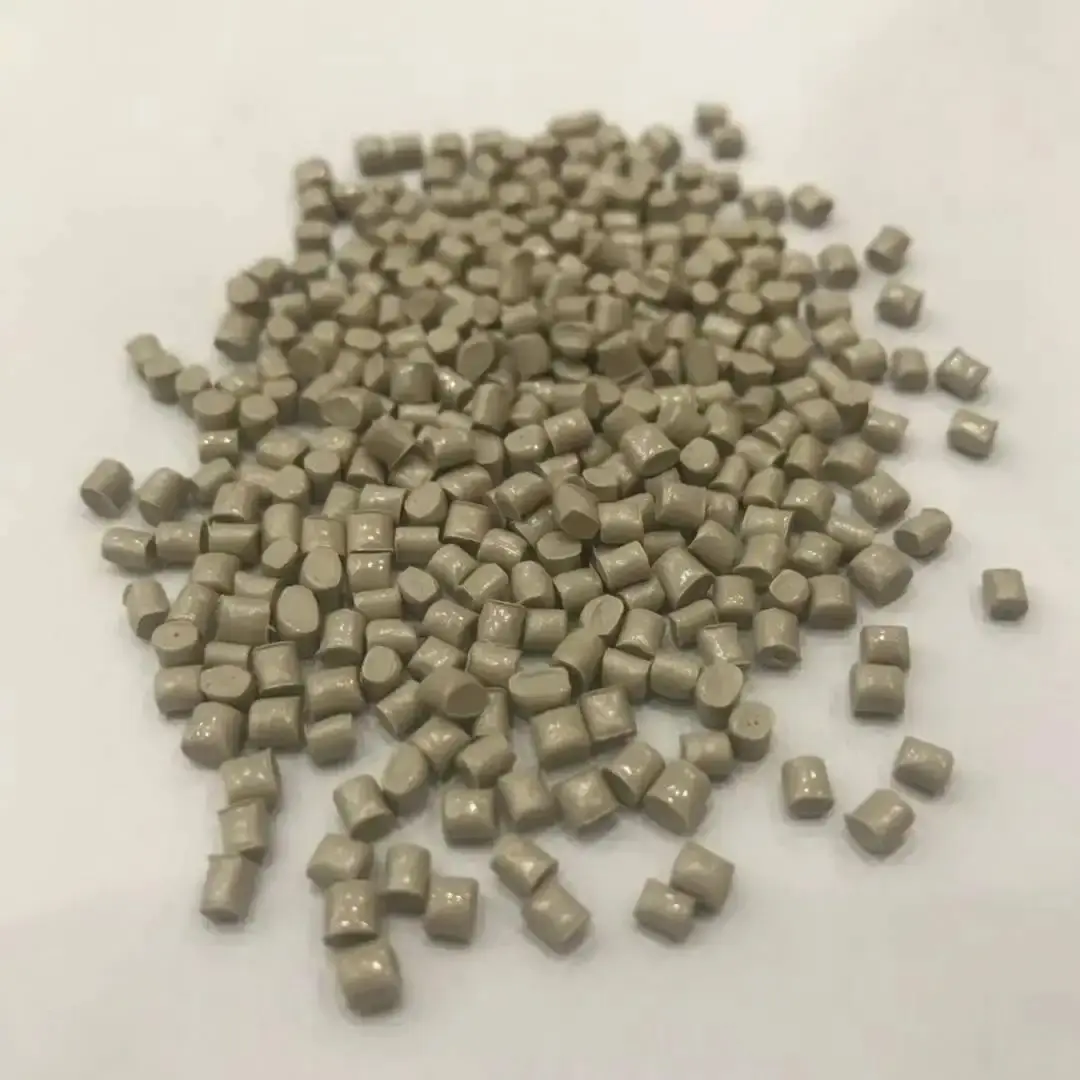
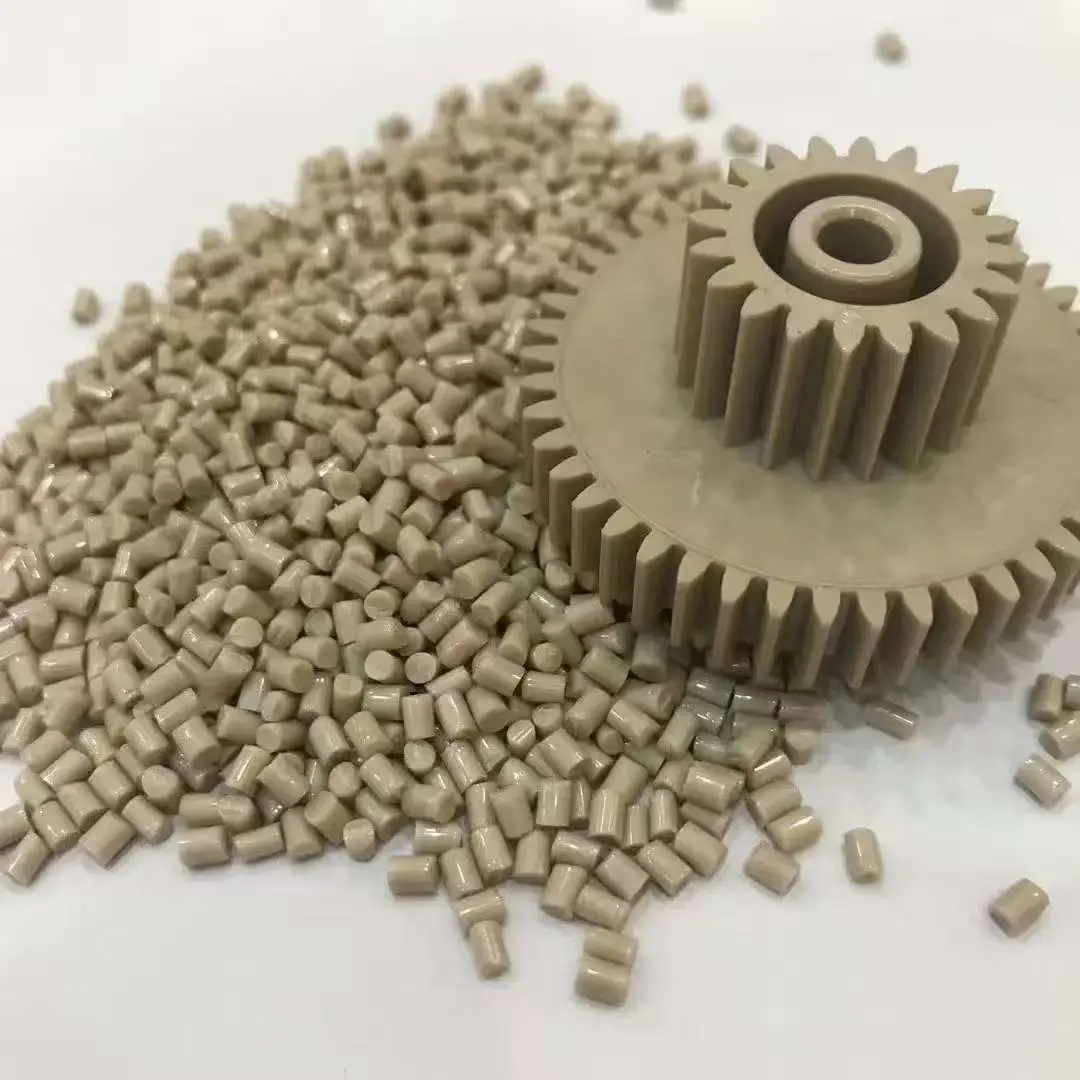
Victrex PEEK 450G is a standard flow, general-purpose polyetheretherketone (PEEK) granule for injection molding and extrusion. Features high temperature, chemical, and wear resistance.
| Manufacturer | VICTREX |
|---|---|
| Density | 1.30 g/cm³ |
| Tensile Modulus | 4000 MPa |
| Tensile Strength at Yield | 98.0 MPa |
| Tensile Strain at Break | 45 % |
Note: See the product description for additional technical specifications
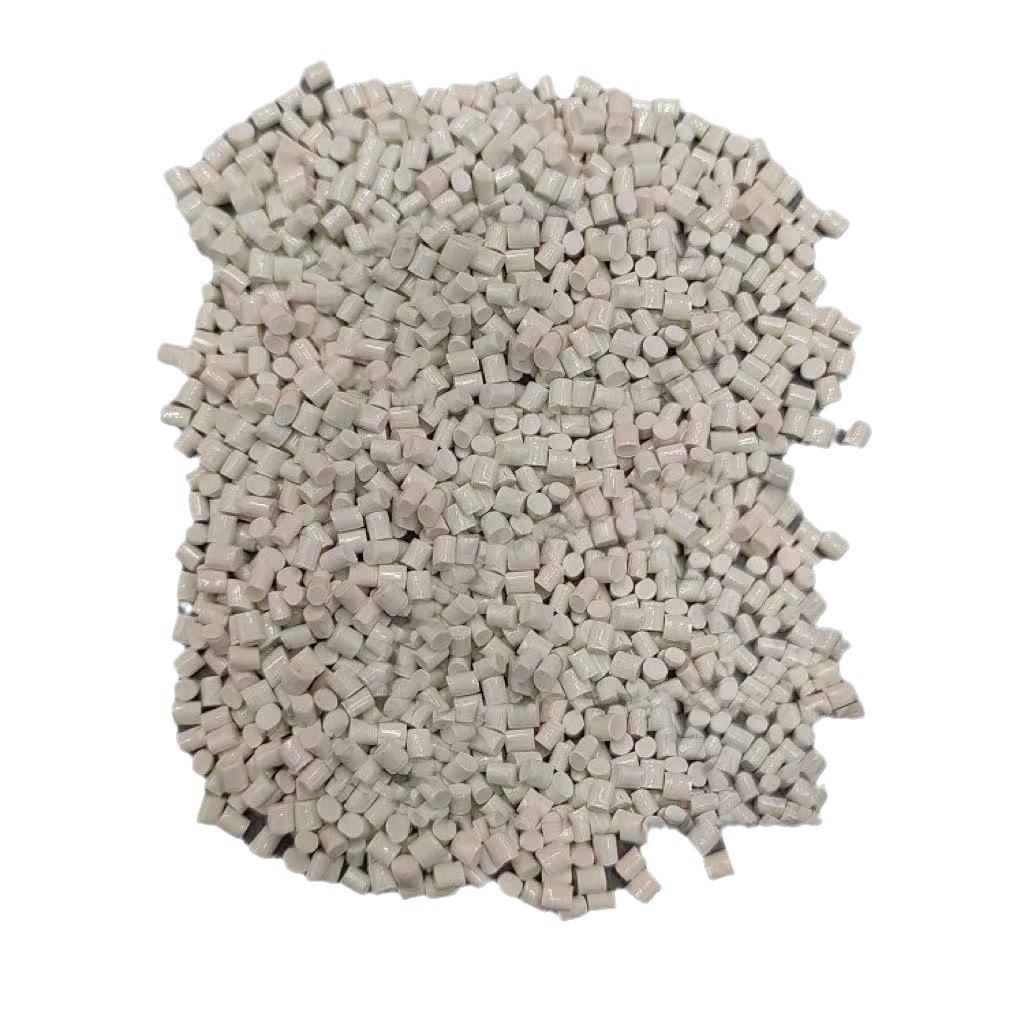
VICTREX® PEEK 450G is a standard flow, general-purpose polyetheretherketone (PEEK) polymer manufactured by Victrex plc (a UK-listed company, LSE: VCT). Victrex is the pioneer and global leader in PEEK polymers, and its VICTREX® brand is recognized as the industry benchmark in the field of high-performance thermoplastic materials. This product is a semi-crystalline thermoplastic, injection molding grade, supplied in granular form with a natural beige/light yellow appearance.
As the most representative standard flow grade from Victrex, VICTREX 450G features a medium molecular weight and medium melt viscosity, making it widely used in injection molding and extrusion processes. Its unique combination of properties simultaneously meets multiple engineering requirements, including high temperature resistance, chemical resistance, wear resistance, high strength, high rigidity, and excellent electrical properties. With its outstanding comprehensive performance, this material is widely adopted by leading global brands across various industries, including aerospace, automotive, healthcare, electrical/electronics, oil & gas, and semiconductors, holding an especially vital position in medical devices, food contact applications, and high-temperature engineering components.
| Physical Properties | Test Value | Test Unit | Test Standard |
| Density, Crystalline | 1.3 | g/cm3 | ISO 1183 |
| Spiral Flow Length (1 mm, 180°C, 375°C) | 11 | cm | Internal Method |
| Melt Viscosity (400°C) | 350 | Pa.s | ISO 11443 |
| Melt Viscosity (400°C) | 350 | Pa.s | ISO 11443 |
| Mold Shrinkage, Normal (375°C nozzle, 180°C tool) | 1.3 | % | ISO 294-4 |
| Mold Shrinkage, Parallel (375°C nozzle, 180°C tool) | 0.9 | % | ISO 294-4 |
| Water Absorption, Saturation (23°C) | 0.45 | % | ISO 62 |
| Water Absorption, Saturation (100°C) | 0.55 | % | ISO 62 |
| Shore Hardness D (23°C) | 84.5 | — | ISO 868 |
| Mechanical Properties | Test Value | Test Unit | Test Standard |
| Tensile Modulus (23°C) | 4000 | MPa | ISO 527-2 |
| Tensile Strength, Yield (23°C) | 98 | MPa | ISO 527-2 |
| Tensile Strain, Break (23°C) | 45 | % | ISO 527-2 |
| Flexural Modulus (23°C) | 3800 | MPa | ISO 178 |
| Flexural Strength, Yield (23°C) | 165 | MPa | ISO 178 |
| Flexural Strength (3.5% Strain, 23°C) | 125 | MPa | ISO 178 |
| Flexural Strength (125°C) | 85 | MPa | ISO 178 |
| Flexural Strength (175°C) | 19 | MPa | ISO 178 |
| Flexural Strength (275°C) | 12.5 | MPa | ISO 178 |
| Compressive Strength (23°C) | 125 | MPa | ISO 604 |
| Compressive Strength (120°C) | 70 | MPa | ISO 604 |
| Charpy Notched Impact Strength (23°C) | 7 | kJ/m2 | ISO 179 1eA |
| Charpy Unnotched Impact Strength (23°C) | No Break | — | ISO 179 |
| Izod Notched Impact Strength (23°C) | 8 | kJ/m2 | ISO 180/1A |
| Izod Unnotched Impact Strength (23°C) | No Break | — | ISO 180 |
| Thermal Properties | Test Value | Test Unit | Test Standard |
| Glass Transition Temp, Onset | 143 | °C | ISO 11357-2 |
| Glass Transition Temp, Onset | 150 | °C | ISO 11357-2 |
| Melting Point | 343 | °C | ISO 11357-3 |
| CTE, Parallel (< 143°C) | 4.50E-05 | cm/cm/°C | ISO 11359-2 |
| CTE, Parallel (> 143°C) | 1.20E-04 | cm/cm/°C | ISO 11359-2 |
| CTE, Normal (< 143°C) | 5.50E-05 | cm/cm/°C | ISO 11359-2 |
| CTE, Normal (> 143°C) | 1.40E-04 | cm/cm/°C | ISO 11359-2 |
| RTI, Electrical | 260 | °C | UL 746 |
| RTI, Impact | 180 | °C | UL 746 |
| RTI, Strength | 240 | °C | UL 746 |
| Glow Wire Ignition Temp (2 mm) | 960 | °C | IEC 60695-2-12 |
| Electrical Properties | Test Value | Test Unit | Test Standard |
| Volume Resistivity (23°C) | 1.00E+16 | ohms·cm | IEC 60093 |
| Volume Resistivity (125°C) | 1.00E+15 | ohms·cm | IEC 60093 |
| Volume Resistivity (275°C) | 1.00E+09 | ohms·cm | IEC 60093 |
| Dielectric Strength (0.05 mm) | 200 | kV/mm | IEC 60243-1 |
| Dielectric Strength (2 mm) | 23 | kV/mm | IEC 60243-1 |
| Relative Permittivity (50 Hz, 23°C) | 3 | — | IEC 60250 |
| Relative Permittivity (23°C, 1.0e+3 Hz) | 3.1 | — | IEC 60250 |
| Relative Permittivity (50 Hz, 200°C) | 4.5 | — | IEC 60250 |
| Dissipation Factor (23°C, 1.0e+6 Hz) | 4.00E-03 | — | IEC 60250 |
| Comparative Tracking Index | 150 | V | IEC 60112 |
Outstanding Thermal Stability & High-Temperature Resistance: The onset glass transition temperature (Tg) is 143°C to 150°C, the melting point is 343°C, and the Relative Thermal Index (RTI) reaches up to 260°C (Electrical, UL 746). It can withstand short-term exposure to extreme temperatures up to 300°C, maintaining excellent mechanical strength and dimensional stability under extreme heat conditions.
Excellent Combination of Mechanical Properties: Featuring a tensile strength of 98.0 MPa, a tensile modulus of 4.0 GPa, a flexural modulus of 3.8 GPa, and a tensile strain at break of 45%. It combines high rigidity and strength with outstanding ductility and toughness, offering fatigue resistance superior to some metals.
Superb Chemical Stability & Corrosion Resistance: Resistant to a wide range of chemical reagents (except for strong oxidizing acids such as concentrated sulfuric acid) and exhibits outstanding hydrolysis resistance, allowing long-term operation in high-temperature steam and corrosive environments. Its chemical resistance is close to that of PTFE, making it ideal for harsh industrial environments and medical sterilization processes.
FDA Food Contact Compliance & Medical Biocompatibility: Complies with FDA food-contact material regulations, making it suitable for food processing equipment and medical care products. It also meets medical-grade biocompatibility requirements, suitable for surgical instruments, non-permanent implantable medical device components, and steam-sterilizable equipment parts.
Superior Flame Retardancy & Low Smoke Emission: Inherently achieves a UL 94 V-0 flammability rating (1.5–3.0 mm thickness) without flame-retardant additives. With a high Limiting Oxygen Index (LOI) of 35%, it produces minimal smoke and low toxic gas emissions during combustion, meeting stringent fire safety requirements in aerospace and electrical/electronic applications.
Good Processability & Compatibility: Its standard flow characteristics make it suitable for various processing methods, including injection molding, extrusion, and compression molding. With a moderate melt viscosity (350 Pa.s @ 400°C), it can be processed using conventional thermoplastic equipment, ideal for producing thin-walled parts and complex geometries.
Excellent Dimensional Stability & Low Water Absorption: With water absorption of only 0.45% (23°C saturated) and stable mold shrinkage (0.9% parallel, 1.3% normal), it ensures that molded parts maintain high dimensional accuracy under humid conditions and temperature fluctuations.
Outstanding Electrical Insulation Properties: Boasting a high volume resistivity of 1.0 x 10^16 ohms.cm (23°C) and a dielectric strength of 23 kV/mm (2.0 mm thickness), it maintains stable insulation performance across a wide temperature range, making it highly suitable for electrical insulation parts and high-frequency applications.
With its lightweight properties (density of only 1.30 g/cm3) and excellent mechanical performance, VICTREX PEEK 450G is widely utilized to replace aluminum and other metals in aircraft components. Its inherent low density, high specific strength, chemical corrosion resistance, and superior flame retardancy make it an ideal choice for aerospace structural components and interior parts. Globally, over 500 million automotive and aerospace parts have been manufactured using Victrex VICTREX™ PEEK materials.
In automotive applications, VICTREX PEEK 450G is utilized in critical components such as engine covers, bearings, thrust washers, seals, and clutch rings due to its exceptional wear resistance and mechanical properties. It is also applied in wear-resistant parts within drivetrain, braking, and air conditioning systems, replacing traditional metals to reduce overall vehicle weight and improve fuel efficiency.
VICTREX 450G complies with FDA food contact standards and medical biocompatibility requirements, making it widely used in surgical instruments, endoscope components, dental diagnostic tools, and high-temperature sterilization equipment parts. The material possesses excellent sterilization performance, tolerating steam sterilization, ethylene oxide (EtO) sterilization, and gamma irradiation, ensuring that medical devices maintain stable properties over repeated sterilization cycles.
The superb electrical insulation and high-temperature resistance of VICTREX PEEK 450G make it a preferred material in the electronics industry, extensively used in semiconductor wafer carriers, insulating films, high-performance equipment housings, and electrical insulation parts. Over 4 billion mobile devices globally utilize Victrex APTIV™ acoustic films, demonstrating the widespread foundation of Victrex PEEK materials in the electronics sector.
In the oil & gas sector, VICTREX PEEK 450G is used for manufacturing seals, valve components, and downhole tool parts, relying on its outstanding chemical and thermal resistance. Its wear resistance and self-lubricating properties make it suitable for various demanding industrial bearings, seals, and compressor parts.
VICTREX 450G complies with FDA food contact standards, suitable for non-implantable food applications and healthcare products. Its excellent dimensional stability, chemical resistance, and ease of cleaning/disinfection make it an ideal material for food processing machinery parts and personal care items.
Q1: What is the continuous service temperature of VICTREX PEEK 450G? How high a temperature can it withstand in the short term?
A: The glass transition temperature (Tg) onset of VICTREX PEEK 450G is 143°C to 150°C, and its melting point is 343°C. According to UL 746, its Relative Thermal Index (RTI) is up to 260°C for electrical properties and 240°C for tensile strength. For short-term applications, the material can withstand extreme environments up to 300°C. For applications requiring dimensional stability at high temperatures, appropriate post-molding annealing is recommended to stabilize the shrinkage behavior of the molded parts.
Q2: Does VICTREX PEEK 450G comply with FDA food contact standards? Is it suitable for medical implants?
A: Yes, VICTREX PEEK 450G complies with FDA food-contact material regulations and can be used in food processing machinery, packaging equipment, and healthcare-related products. In the medical field, the material meets medical-grade biocompatibility requirements, making it suitable for surgical instruments, dental diagnostics, laboratory equipment, and reusable non-permanent medical devices requiring repeated sterilization. It is important to note that VICTREX® PEEK 450G is a standard industrial/food-grade resin and is not intended for long-term human implants (exceeding 30 days). For specific medical device regulatory certifications, customers are advised to verify requirements according to local standards (such as FDA 510(k), CE Mark, etc.) based on their specific project location.
Q3: Does VICTREX PEEK 450G require pre-drying before processing? What are the recommended processing parameters?
A: Yes, to ensure optimal processing performance and final product quality, it is highly recommended to pre-dry the material at 120–150°C for 3 to 5 hours. VICTREX PEEK 450G is suitable for injection molding, extrusion, and compression molding. The recommended melt temperature is 375–400°C, and the mold temperature should be controlled at approximately 180°C. No specialized equipment is required during processing; standard thermoplastic processing machinery is fully sufficient. It is recommended to consult Victrex’s technical service team before processing to obtain optimized parameters tailored to specific part geometries and application scenarios.
Submit your inquiry today and receive a professional competitive price tailored to your project requirements.