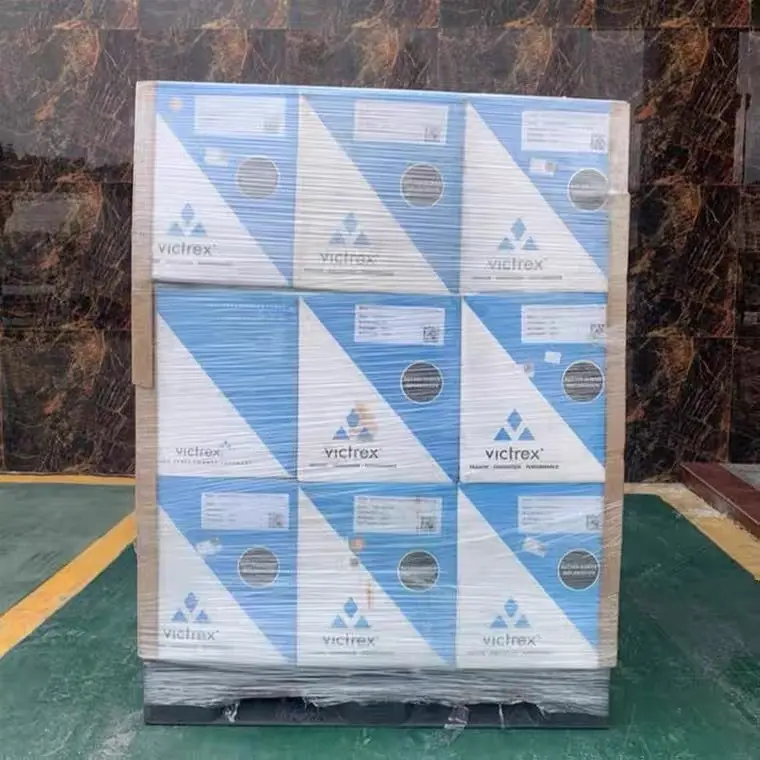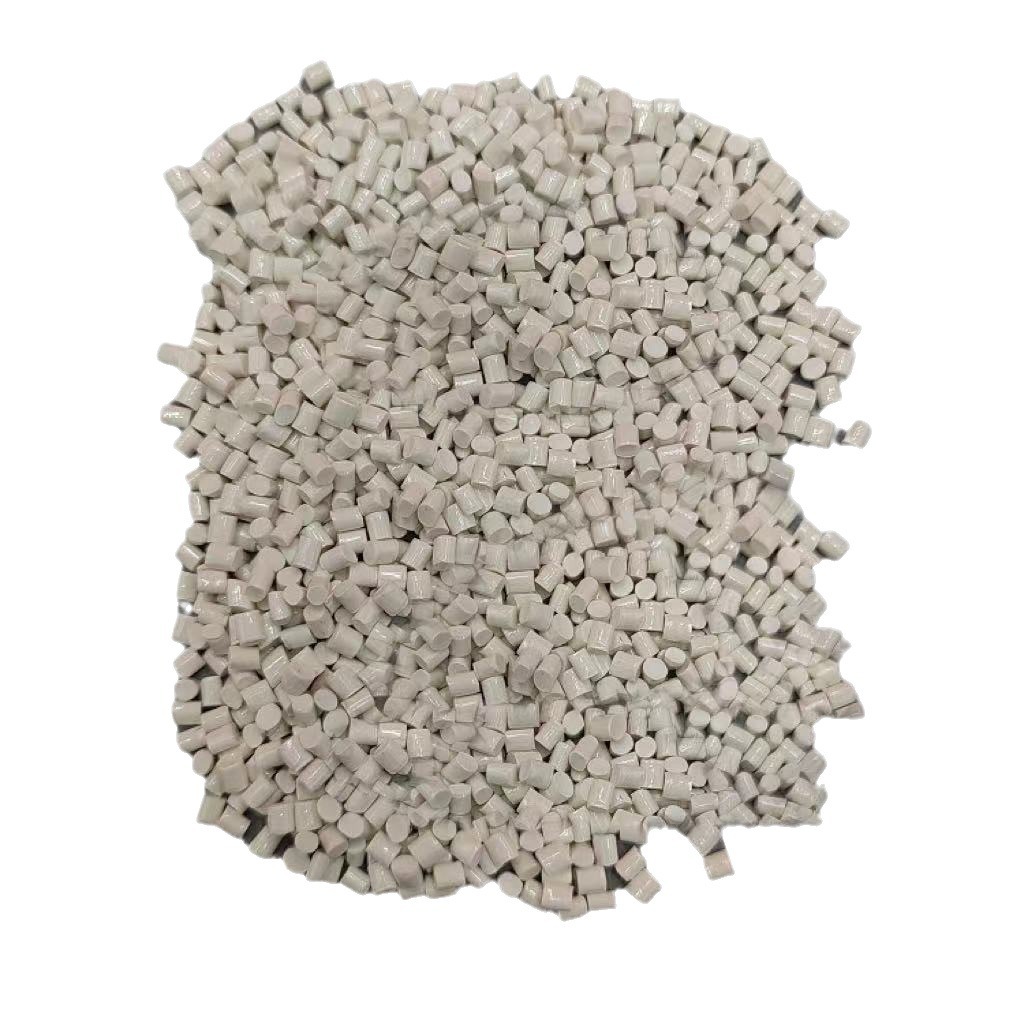
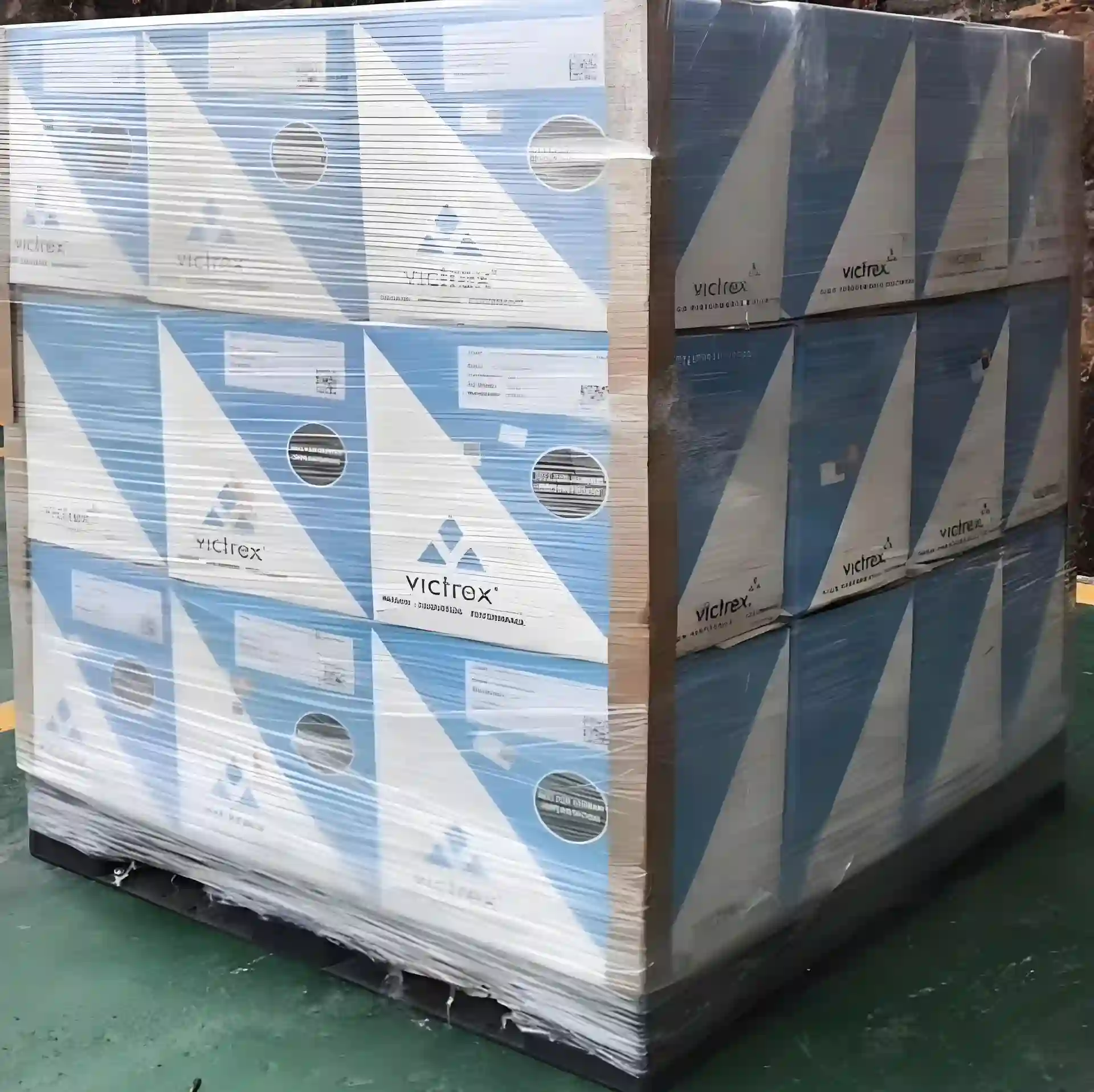
Victrex 90CA30 is a 30% carbon-fiber-reinforced, high-flow PEEK resin featuring an HDT of 342°C and high rigidity for precision metal-replacement parts.
| Manufacturer | VICTREX |
|---|---|
| Density | 1.40 g/cm³ |
| Tensile Strength at Break | 275 MPa |
| Elongation at Break | 1.4 % |
| Flexural Modulus | 24000 MPa |
Note: See the product description for additional technical specifications
Manufacturer: Victrex plc
Category: Polyetheretherketone (PEEK), 30% carbon fiber reinforced, injection molding grade, high-flow / low-viscosity grade
Appearance: Black pellets
Processing Method: Injection molding
Victrex 90CA30 is a high-performance engineering plastic developed by Victrex plc, a global leader in polyetheretherketone (PEEK). Containing 30% short carbon fiber reinforcement, 90CA30 is a low-viscosity, high-flow base resin grade in the 90 series, specifically designed for challenging injection molding and complex precision components.
Victrex 90CA30 occupies a crucial position in advanced industrial manufacturing as a premier metal-replacement material. Key applications include aerospace fasteners and structural parts, semiconductor manufacturing wafer carriers and conductive fixtures, automotive engine and transmission wear rings, as well as high-pressure pump and valve components in industrial fluid machinery.
| Property | Value | Unit | Test Standard |
| Crystalline Density | 1.4 | g/cm³ | ISO 1183 |
| Spiral Flow Length (190°C, 380°C, 1 mm) | 13 | cm | Internal Method |
| Mold Shrinkage, Normal (380°C nozzle, 190°C tool) | 0.5 | % | ISO 294-4 |
| Mold Shrinkage, Parallel (380°C nozzle, 190°C tool) | 0.1 | % | ISO 294-4 |
| Water Absorption, Saturation (23°C) | 0.3 | % | ISO 62 |
| Water Absorption, Saturation (100°C) | 0.45 | % | ISO 62 |
| Shore Hardness D (23°C) | 88 | — | ISO 868 |
| Melt Viscosity (400°C) | 250 | Pa·s | ISO 11443 |
| Property | Value | Unit | Test Standard |
| Tensile Modulus (23°C) | 28000 | MPa | ISO 527-2 |
| Tensile Strength at Break (23°C) | 275 | MPa | ISO 527-2 |
| Tensile Strength at Break (125°C) | 180 | MPa | ISO 527-2 |
| Tensile Strength at Break (175°C) | 110 | MPa | ISO 527-2 |
| Tensile Strength at Break (225°C) | 85 | MPa | ISO 527-2 |
| Tensile Strength at Break (275°C) | 65 | MPa | ISO 527-2 |
| Tensile Strain at Break (23°C) | 1.4 | % | ISO 527-2 |
| Flexural Modulus (23°C) | 24000 | MPa | ISO 178 |
| Flexural Strength (23°C) | 380 | MPa | ISO 178 |
| Flexural Strength (125°C) | 275 | MPa | ISO 178 |
| Flexural Strength (175°C) | 130 | MPa | ISO 178 |
| Flexural Strength (225°C) | 65 | MPa | ISO 178 |
| Compressive Strength (23°C) | 300 | MPa | ISO 604 |
| Compressive Strength (120°C) | 200 | MPa | ISO 604 |
| Compressive Strength (200°C) | 70 | MPa | ISO 604 |
| Charpy Notched Impact Strength (23°C) | 6 | kJ/m² | ISO 179/1eA |
| Charpy Unnotched Impact Strength (23°C) | 45 | kJ/m² | ISO 179/1U |
| Izod Notched Impact Strength (23°C) | 7 | kJ/m² | ISO 180/1A |
| Izod Unnotched Impact Strength (23°C) | 40 | kJ/m² | ISO 180 |
| Property | Value | Unit | Test Standard |
| Deflection Temperature Under Load, Unannealed (1.8 MPa) | 342 | °C | ISO 75-2/Af |
| Glass Transition Temperature (Tg), Onset | 143 | °C | ISO 11357 |
| Melting Point | 343 | °C | ISO 11357-3 |
| Coefficient of Linear Thermal Expansion (CTE), Parallel (< 143°C) | 5.00E-06 | cm/cm/°C | ISO 11359-2 |
| Coefficient of Linear Thermal Expansion (CTE), Parallel (> 143°C) | 5.00E-06 | cm/cm/°C | ISO 11359-2 |
| Coefficient of Linear Thermal Expansion (CTE), Normal (< 143°C) | 4.00E-05 | cm/cm/°C | ISO 11359-2 |
| Coefficient of Linear Thermal Expansion (CTE), Normal (> 143°C) | 9.00E-05 | cm/cm/°C | ISO 11359-2 |
| Specific Heat (23°C) | 1800 | J/kg/°C | DSC |
| Thermal Conductivity, Average (23°C) | 0.95 | W/m-K | ISO 22007-4 |
| Thermal Conductivity, In-Plane Flow Direction (23°C) | 2 | W/m-K | ISO 22007-4 |
| Glow Wire Flammability Index (GWFI) (2 mm) | 960 | °C | IEC 60695-2-12 |
| Toxicity, CO Content | 0.05 | — | NES 713 |
| Toxicity (CO2 Content 0) | 0.12 | — | NES 713 |
| Toxicity, Total Gas | 0.17 | — | NES 713 |
| Property | Value | Unit | Test Standard |
| Volume Resistivity (23°C, 1V 0) | 1.00E+05 | ohms·cm | ASTM D4496 |
The technical data sheet (TDS) of Victrex 90CA30 PEEK material from Victrex corporation, if there are differences, please refer to the official website of Victrex.
Exceptional Rigidity and Mechanical Strength (30% Carbon Fiber Reinforced): Incorporating 30% short carbon fiber reinforcement boosts its flexural strength to 380 MPa and tensile modulus to 28,000 MPa. It maintains high dimensional stability and creep resistance under extreme mechanical stress and heavy loading, making it an ideal lightweight replacement for aluminum, titanium alloys, and stainless steel components.
Superior Load-Bearing Capability at High Temperatures (HDT 342°C): Featuring a melting point of 343°C and a heat deflection temperature (HDT at 1.8 MPa) of 342°C, the material retains excellent mechanical strength under extreme thermal conditions near its melting point, making it highly suitable for high-temperature environments such as automotive engine compartments, aerospace engine peripheral parts, and industrial baking ovens.
High-Flow Matrix for Precision Molding (Melt Viscosity 250 Pa·s): Built on Victrex’s low-viscosity (90 series) base matrix, it exhibits a melt viscosity of only 250 Pa·s at 400°C and a spiral flow distance of 13.0 cm. This significantly alleviates the poor flowability common to carbon-fiber-reinforced resins, enabling smooth filling of thin-walled, long-flow-path, or structurally complex injection molds.
Outstanding Tribological Properties and Wear Resistance: The addition of carbon fibers imparts a very low coefficient of friction and exceptional wear resistance. Under unlubricated or dry-sliding conditions, 90CA30 operates smoothly over long periods, substantially extending the service life of sliding mating components (such as bearings, gears, and seal rings).
Electrostatic Dissipation/Conductivity and Broad Chemical Resistance: With a volume resistivity of 1.0E+5 ohms·cm, it exhibits excellent electrostatic dissipation (ESD) performance, protecting sensitive electronic components from static breakdown. Concurrently, it displays high chemical inertness toward strong acids, strong bases, organic solvents, aviation fuels, and hydraulic fluids.
Semiconductor & Electronics Manufacturing: Wafer handling fixtures, IC test sockets, CMP retaining rings, LCD transfer rollers, and conductive ESD-safe fixtures. It prevents static accumulation and particle contamination by virtue of its low outgassing, static dissipative performance, and resistance to aggressive chemical cleaning solutions.
Automotive & Rail Transportation: Engine sensor housings, vacuum pump gears, thrust washers, bearing cages, and transmission seal rings. Replacing metal parts not only significantly reduces vehicle weight and operational noise, but also delivers superior wear resistance and durability under dry-sliding and hot, oily environments.
Aerospace & Defense: Fasteners, aircraft interior brackets, sensor housings, brackets, and fluid conduit assemblies. Leveraging lightweight properties, high rigidity, low toxicity and smoke emissions (NES 713 standard), and superior flame retardancy (GWFI 960°C), it meets stringent aerospace safety standards.
Industrial Fluid & Mechanical Engineering: High-pressure pump and valve components, compressor valve plates, oil-free lubricated bearing sleeves, and chemical valve seats. It effectively resists media attack and mechanical wear in harsh operating environments involving highly corrosive media or high temperatures and pressures.
Q1: Does Victrex 90CA30 require pre-drying prior to injection molding? What are the recommended drying parameters?
Yes, pre-drying is mandatory. Although PEEK has low saturation water absorption (0.3%), even trace moisture will cause hydrolytic degradation of polymer chains at high processing temperatures of 380°C–400°C, resulting in brittle parts, surface splay, and degraded mechanical properties.
Drying Recommendations: It is recommended to use a hot-air circulating oven or a desiccant dryer to dry the resin at 150°C for 3 to 4 hours, ensuring the moisture content is controlled to below 0.02%.
Q2: How should one choose between Victrex 90CA30 (30% carbon fiber) and Victrex 90GL30 (30% glass fiber)?
The choice depends on specific mechanical and electrical requirements:
Mechanical Strength and Rigidity: 90CA30 (carbon fiber) offers a much higher tensile modulus (28,000 MPa) and flexural strength (380 MPa) than 90GL30 (glass fiber), along with superior creep resistance and wear resistance.
Weight: Carbon fiber has a lower density; 90CA30 (1.40 g/cm³) is lighter than 90GL30 (1.51 g/cm³), making it better suited for extreme lightweighting needs.
Conductivity vs. Insulation: 90CA30 provides static dissipation / electrical conductivity (volume resistivity of 1.0E+5 ohms·cm), whereas 90GL30 is a highly electrically insulating material. Choose 90GL30 if high-voltage insulation is required; choose 90CA30 if ESD protection, high strength, or lightweighting is needed.
Q3: What are the strict mold temperature requirements when injection molding Victrex 90CA30? What are the consequences of an insufficient mold temperature?
The mold temperature must be strictly controlled between 170°C and 200°C.
PEEK is a semi-crystalline polymer, and achieving full crystallization is essential to realize its heat and chemical resistance properties. If the mold temperature is too low (below 150°C), rapid cooling of the melt creates an amorphous (non-crystalline) skin layer, leading to: dimensional drift due to post-shrinkage during service, a drastic drop in heat deflection temperature, weakened chemical resistance, and elevated internal stress prone to cracking. Oil-heated temperature controllers (oil heaters) are strongly recommended to ensure consistent mold temperatures.
Submit your inquiry today and receive a professional competitive price tailored to your project requirements.