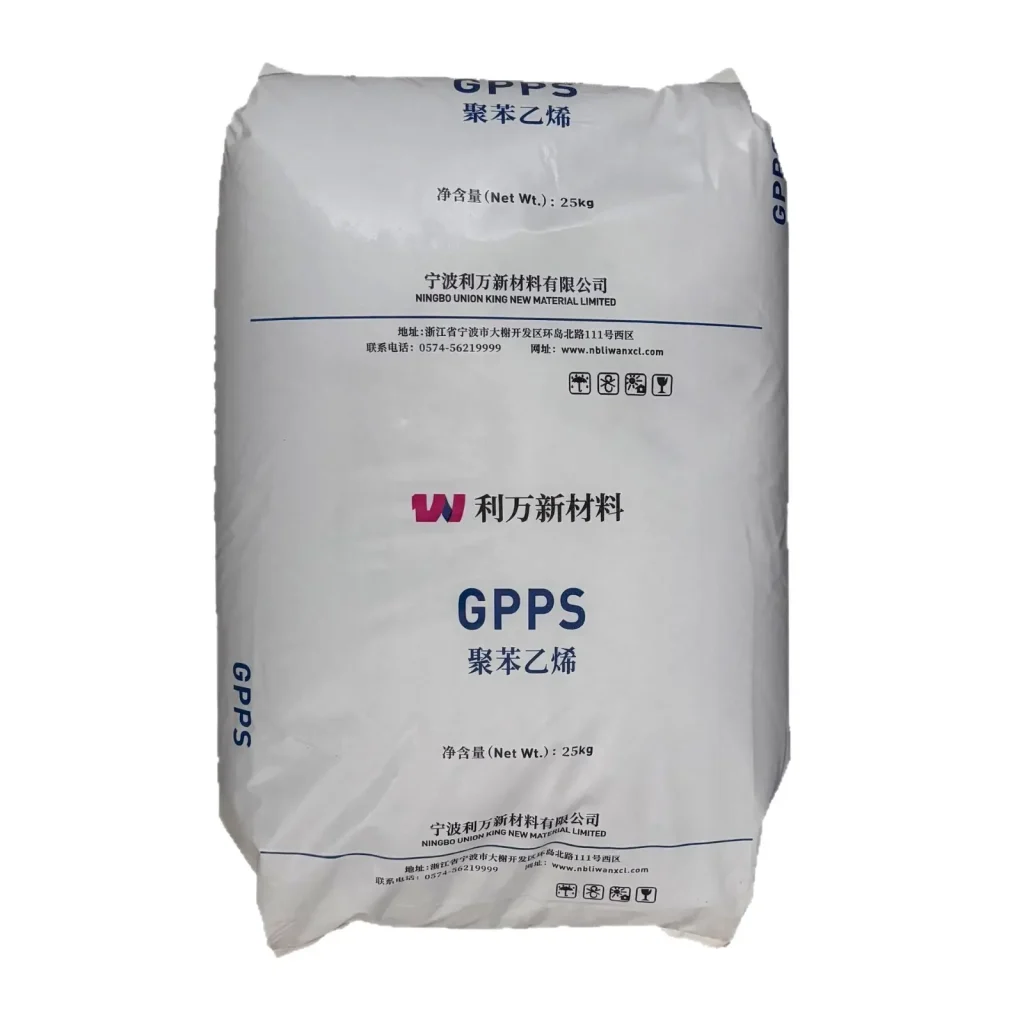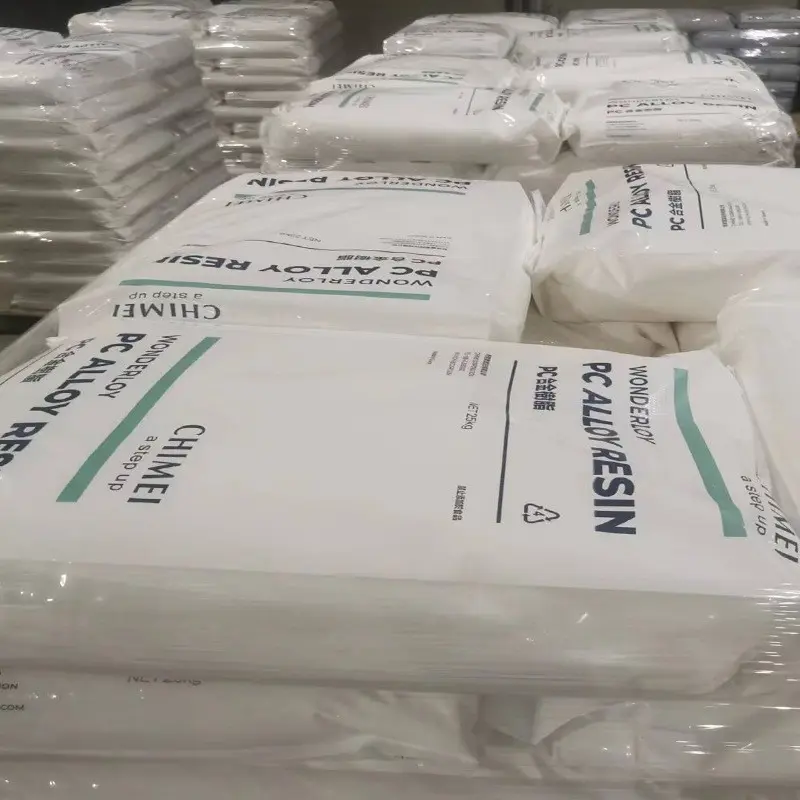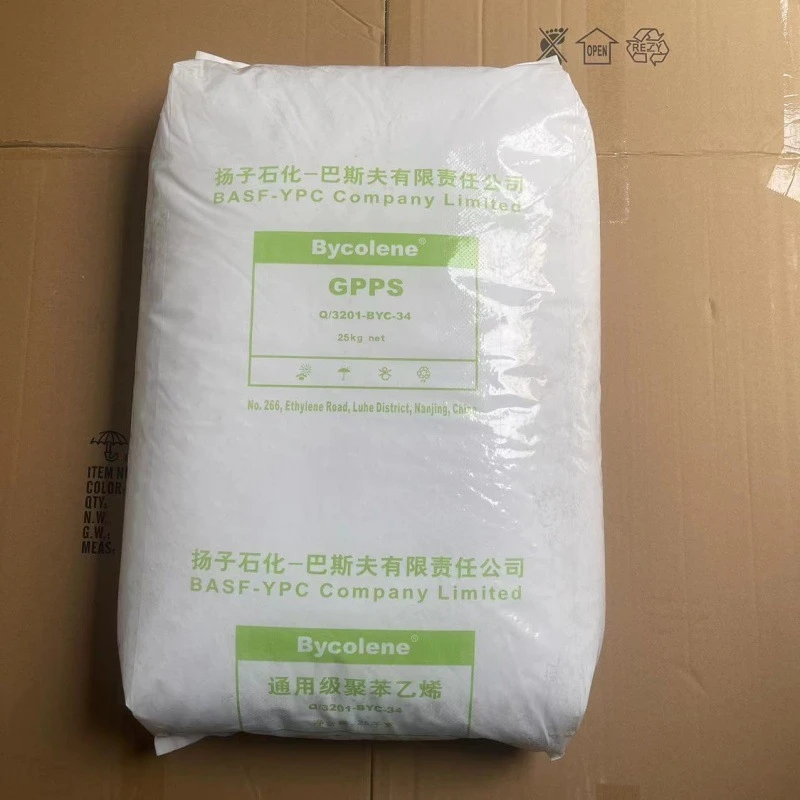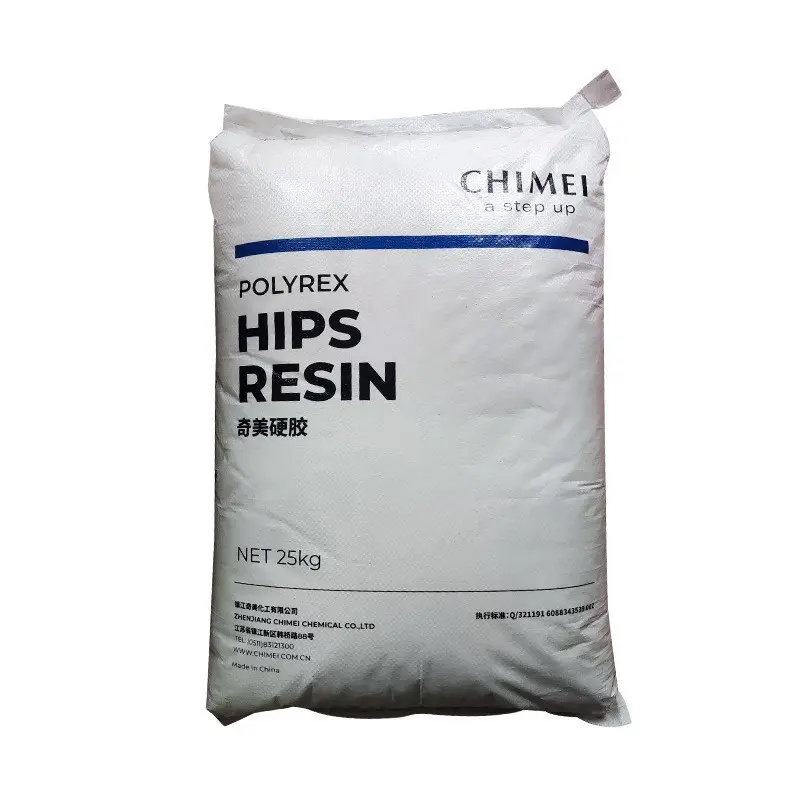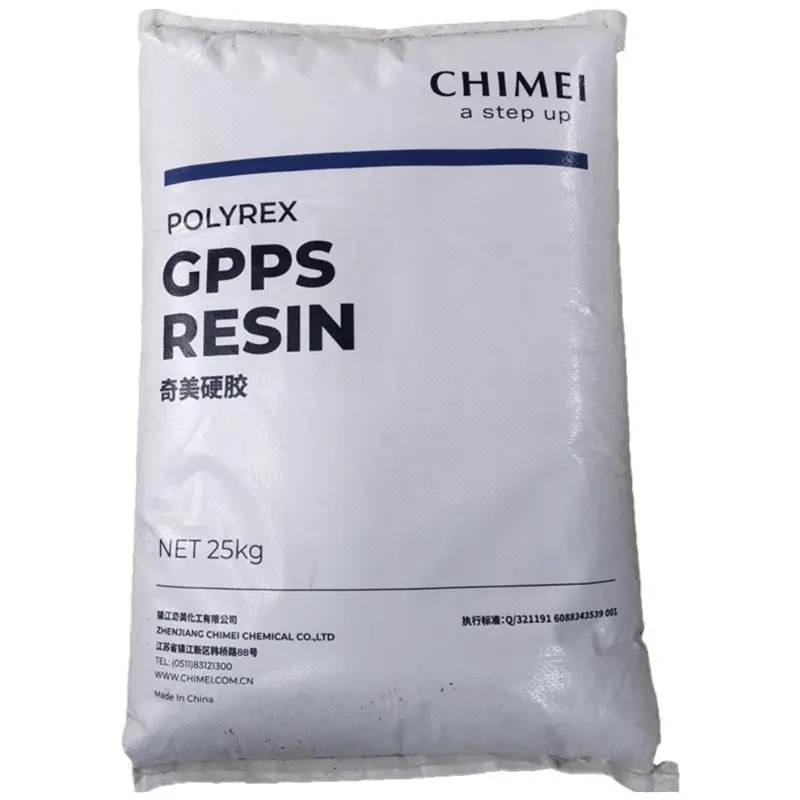
CHIMEI POLYREX PG-383M is a high-heat, high-rigidity general purpose polystyrene (GPPS) resin featuring excellent optical clarity and balanced melt processability for clear consumer packaging and housewares.
| Manufacturer | Chimei |
|---|---|
| Density | 1.04 g/cm³ |
| MVR | 3.0 cm³/10 min |
| Elongation at Break | 4.0 % |
| Flexural Modulus | 3000 MPa |
Note: See the product description for additional technical specifications
CHIMEI POLYREX® PG-383M is an original virgin general purpose polystyrene (GPPS) transparent plastic raw material manufactured by CHIMEI. It belongs to the general purpose transparent polystyrene material category. The finished product consists of uniform cylindrical transparent plastic granules, free of off-colors, black spots, or impurities, and delivers exceptional light transmission performance, making it a highly versatile standard GPPS matrix on the market.
As a core commercial grade in the CHIMEI POLYREX® GPPS portfolio, PG-383M strikes a well-balanced combination of rigidity, melt processability, and cost-effectiveness. It maintains an exceptionally high market share within the daily-use plastics and transparent injection-molded parts industries, serving as the preferred transparent commodity plastic for small-to-medium injection molding factories and household goods manufacturers. This grade accommodates standard injection molding processes and enables the stable mass production of various highly transparent, rigid plastic components, fundamentally covering downstream sectors such as consumer goods, clear packaging, basic home appliance accessories, children’s toys, and optical accessories for stationery.
| Physical Property | Value | Unit | Test Standard |
| Melt Volume-Flow Rate (5 kg, 200 ℃) | 3 | cm³/10 min | ISO 1133 |
| Density (23 ℃) | 1.04 | g/cm³ | ISO 1183 |
| Mechanical Property | Value | Unit | Test Standard |
| Tensile Strength (50 mm/min) | 50 | MPa | ISO 527 |
| Tensile Strain at Break (50 mm/min) | 4.0 | % | ISO 527 |
| Flexural Strength (2 mm/min) | 80 | MPa | ISO 178 |
| Flexural Modulus (2 mm/min) | 3000 | MPa | ISO 178 |
| Izod Impact Strength, Notched (23 ℃, 4 mm) | 4.0 | kJ/m² | ISO 180 |
| Charpy Impact Strength (23 ℃, 4 mm) | 2.7 | kJ/m² | ISO 179 |
| Thermal Property | Value | Unit | Test Standard |
| Vicat Softening Point (10 N, 50 ℃/hr) | 93 | ℃ | ISO 306 |
| Heat Deflection Temperature (0.45 MPa) | 94 | ℃ | ISO 75-2 |
| Heat Deflection Temperature (1.8 MPa) | 81 | ℃ | ISO 75-2 |
| Flammability Class (1.5 mm) | HB | — | UL-94 |
The technical data sheet (TDS) of CHIMEI POLYREX® PG-383M GPPS material from CHIMEI corporation, if there are differences, please refer to the official website of CHIMEI.
Ultra-High Transparency with a Clean Appearance: The pure GPPS base matrix offers excellent natural clarity, free from defects like haze or yellowing. Molded components present high gloss without requiring secondary polishing, allowing for direct use in visible transparent parts to meet the aesthetic demands of stationery and clear containers.
Balanced Melt Flowability with High Processing Tolerance: Featuring a melt volume-flow rate of 3.0 cm³/10min under 200℃/5kg conditions, its moderate viscosity allows for the stable injection molding of both thin-walled and standard thick-walled parts. It minimizes processing flaws like flow marks, shrinkage, and bubbles, and runs smoothly on most standard horizontal injection molding machines.
High Rigidity and Structural Dimension Stability: With a flexural modulus reaching up to 3000 MPa, the material exhibits high stiffness and rigidity, ensuring finished goods resist bending or warping. Its stable molding shrinkage rate yields controllable dimensional tolerances for mass-produced parts, making it well-suited for standardized components.
Stable Thermal Properties with Resistance to Thermal Degradation: With a Vicat softening point of 93°C, it provides a sufficient heat resistance margin for conventional use. It does not easily yellow or degrade within typical injection molding temperature windows, enabling stable appearance and mechanical profiles during short-cycle mass production.
High Cost-Effectiveness with Extensive Versatility: Compared to other transparent polymers like PMMA or PC, it features a lower raw material cost, no specialized molding prerequisites, and a low inventory stocking threshold, lowering overall production waste and catering to high-volume commercial goods.
Pure Original Virgin Pellets to Maximize Yield Rates: Sourced as 100% genuine virgin granules directly from the CHIMEI factory with no recycled blending, it guarantees low defect rates regarding black spots or fish-eyes, substantially reducing scrap costs during injection molding production runs.
Transparent rulers, pen barrels, document storage trays, transparent pencil cases, acrylic-textured display racks, and clear desk organizers, relying on high transparency and structural stiffness to keep products upright and aesthetically pleasing.
Disposable clear drinking cups, cosmetic sample dispensing bottles, clear food storage bins, compact mirror housings, and clear organizer bins, suited for ambient-temperature food and daily chemical packaging scenarios.
Transparent building blocks, toys with clear cartoon outer shells, and tabletop assembly parts. The raw material releases no hazardous substances, and its translucent texture enhances the product’s premium feel.
Refrigerator clear crisper drawers, clear viewing windows for small appliances, decorative transparent housings for small fans, and humidifier visible water tanks, satisfying daily ambient-temperature appliance component demands.
Standard light diffusion lampshades, simple display signage, and decorative transparent lenses, applicable for basic optical molded parts that do not demand high-intensity heat resistance or impact strength.
Q1: Does CHIMEI POLYREX® PG-383M GPPS require drying prior to injection molding? What are the drying guidelines?
A: GPPS inherently exhibits extremely low moisture absorption, so raw materials stored in standard environments for a short term can be loaded directly onto the machine. However, if the material has faced long-term moisture exposure or suffered damaged packaging, the recommended drying parameters are: hot-air drying at 70 – 80 ℃ for 2 – 3 hours to eliminate surface moisture and prevent silver streaks or bubbles in molded products. The drying temperature must not exceed 90°C to prevent the granules from premature softening and clumping.
Q2: What are the core differences among PG-383M GPPS, PMMA, and PC transparent materials, and how should one select among them?
A: While all three function as transparent plastics, their applicable scenarios differ significantly:
PG-383M GPPS: Offers the lowest cost and good flowability but relatively lower impact strength, with a heat resistance ceiling around 90°C, making it ideal for affordable ambient-temperature daily items and stationery.
PMMA (Acrylic): Delivers higher light transmittance and scratch resistance but exhibits poor flowability and greater brittleness, primarily utilized in high-end display signage.
PC (Polycarbonate): Features high impact strength and heat resistance exceeding 120°C with a higher cost profile, applicable for safety-critical components requiring high-temperature and drop resistance (such as water bottles and automotive lenses). Prioritize PG-383M if you target optimized mass production costs and standard clear aesthetics; opt for PMMA for scratch resistance and superior clarity; and choose PC for high-temperature or high-impact working conditions.
Q3: Does CHIMEI PG-383M comply with RoHS environmental standards and carry a UL certification?
A: The original base grade of CHIMEI POLYREX® PG-383M GPPS satisfies the EU RoHS hazardous substance restriction standards, supporting the export of consumer goods to European and American markets. Its flammability rating stands at UL94 HB (for 1.5mm specimens), which applies strictly to conventional civil products with no fireproofing mandates. If your product demands a V0 or V2 flame retardant rating, you will need to select an alternative grade from CHIMEI’s flame-retardant modified GPPS series.
Q4: Can this grade be blended and used with recycled GPPS?
A: High-ratio blending with recycled materials is not recommended. Recycled GPPS easily introduces yellowing, black spots, and sharp declines in impact strength. If a minor blend is mandatory, the recycled material ratio should not exceed 10% and must undergo thorough impurity filtration; otherwise, it will drastically compromise the finished product’s light transmittance and mechanical performance, hurting the yield rate of your terminal goods.
Submit your inquiry today and receive a professional competitive price tailored to your project requirements.