Introduction
Selecting the appropriate plastic material for water bottle products directly impacts end-consumer safety, regulatory compliance, and brand market acceptance. Currently, PET (Polyethylene Terephthalate), PC (Polycarbonate), PCTG (Polycyclohexylenedimethylene Terephthalate Glycol), and PPSU (Polyphenylsulfone) are the four most common resin materials used in the water bottle manufacturing sector. They exhibit significant differences in safety, thermal resistance, transparency, and cost.
Based on food contact material safety standards and materials engineering principles, this article systematically compares the properties of these four materials to provide a clear and reliable reference for water bottle manufacturers, brand owners, and material selection personnel.
Material Profiles
PET (Polyethylene Terephthalate)
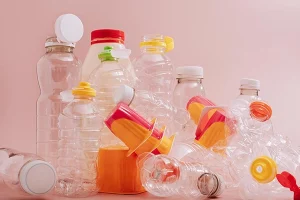
PET is the most widely used beverage packaging material globally, designated by the recycling code “1”. Its advantages include high transparency, good gas barrier properties, and low production costs. PET itself does not contain Bisphenol A (BPA), but its thermal resistance is limited, with a heat deflection temperature typically around 65–70°C, making it prone to deformation under high temperatures. Consequently, PET water bottles are unsuitable for reuse or holding hot water, and are primarily oriented toward the single-use bottled water market.
PC (Polycarbonate)
PC is an amorphous engineering plastic renowned for its extremely high transparency (≥90%) and outstanding impact resistance. Traditional PC utilizes Bisphenol A (BPA) as a synthetic raw material, which is the core of its safety controversy. Although certain specially certified food-grade PC grades (such as specific materials dedicated to 5-gallon water carboys) are still permitted for use in specific containers under compliant usage conditions, PC has basically been replaced by safer alternatives in infant water bottles and reusable sports bottles.
PCTG (Polycyclohexylenedimethylene Terephthalate Glycol)
PCTG is a non-crystalline copolyester that has become a mainstream choice for sports water bottles and children’s cups in recent years due to being BPA-free and possessing a high transparency close to glass. Compared to PET, the thermal resistance of PCTG is significantly enhanced, capable of withstanding temperatures of 85–100°C. Representative brands include the Tritan™ series from Eastman Chemical Company (USA) and the ECOZEN® series from SK Chemicals (South Korea).
PPSU (Polyphenylsulfone)
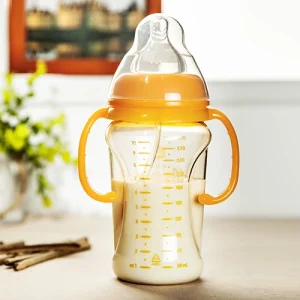
PPSU is a high-performance engineering plastic belonging to the polysulfone (PSF) family. Its most prominent features are its exceptional thermal resistance (capable of long-term exposure above 180°C), excellent hydrolysis resistance, chemical corrosion resistance, and outstanding impact strength. The molecular structure of PPSU contains no BPA or its derivatives, and it can endure repeated steam sterilization and boiling water submersion. Therefore, it is widely considered one of the safest plastic materials for high-risk application scenarios such as baby bottles. The finished product carries a slight amber tint, and its production cost is relatively high.
In-Depth Safety Analysis
Global Market Regulatory Compliance
All plastic materials used for water bottles must comply with the food contact safety regulatory requirements of the target markets:
- US Market: Complies with relevant sections of FDA 21 CFR (PET §177.1630, PC §177.1580, PPSU §177.2500, etc.). The FDA has evaluated the safety of PET and approved it for food contact. For PC, traditional BPA-containing grades are no longer applicable to infant products.
- EU Market: Enforces the EU 10/2011 food contact materials regulation. With the official implementation of the latest EU regulations banning Bisphenol A (BPA) in food contact materials, the use of BPA and other bisphenol derivatives with identical endocrine-disrupting effects is strictly prohibited in direct food-contact materials, except for extremely low established thresholds.
- Chinese Market: Complies with the GB 4806 series standards. PET, PC, PCTG, and certain PPSU grades have been included in the national list of plastic resins for food contact.
- Other Markets: Japan, South Korea, Germany (LFGB), etc., each maintain their own respective certification systems.
Core Safety Points of the Four Materials
| Material | BPA/BPS Content | Primary Safety Considerations | Reusability | Typical Safety Level |
| PET | Free | Poor thermal resistance; repeated use may increase the risk of migration of catalyst residues. | Not recommended (Limited to single-use) | Safe |
| PC | Traditional grades contain BPA; a few special grades claim to be BPA-free | BPA has endocrine-disrupting effects; BPA release increases significantly under boiling water conditions. | Restricted to specific large containers | Medium (Controversial) |
| PCTG | Free | Claimed BPA-free; some studies suggest the long-term potential risks of alternative bisphenols (like BPS) are not yet fully ruled out. | Recommended | High |
| PPSU | Free | No bisphenol compounds in the molecular structure; highly heat-resistant and chemically inert. | Highly suitable (Endures repeated sterilization) | Very High |
Important Note: Regarding PCTG, although it is claimed to be “BPA-free”, some academic studies (such as the University of California, Los Angeles study on the effects of BPS on zebrafish embryos) suggest that the long-term safety of alternative bisphenol substances still requires more data support. Therefore, manufacturers selecting PCTG should request comprehensive material safety declarations and third-party compliance test reports from raw material suppliers.
Material Key Performance Comparison
| Performance Indicator | PET | PC | PCTG | PPSU |
| Transparency | High | High (≥92%) | Extremely High (Glass-like) | Medium (Slight amber tint) |
| Thermal Resistance (Continuous Use) | ~70°C (Prone to deformation) | ~110–130°C | 85–100°C | 180–207°C |
| Impact Resistance | Medium | Extremely High | High | Extremely High |
| BPA/BPS Content | Free | Traditional grades contain BPA | Free | Free |
| Chemical Resistance | Medium | Medium | Good | Excellent |
| Typical Water Bottle Applications | Single-use bottled water | 5-gallon water carboys | Sports bottles, children’s cups | Baby bottles, premium insulated bottles |
| Relative Cost | Low | Medium | Medium-High | High |
Material Selection Guide
Based on different water bottle product positionings and usage scenarios, the following selection recommendations can be referenced:
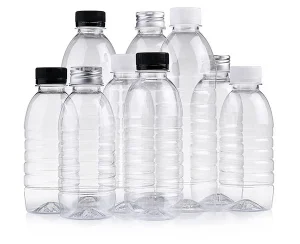
Production of Single-Use Bottled Water → Select PET PET is the choice with the lowest cost and largest production volume. Key focus should be placed on the food-grade certifications of the raw material (such as FDA, EU, GB) and manufacturing line impurity control. For markets requiring recycled content certification (such as rPET), the traceability of the supply chain must also be verified.
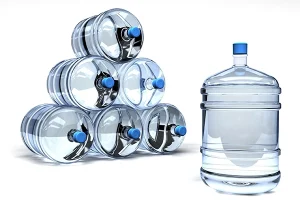
Production of Reusable Large-Capacity Water Carboys (e.g., 5-Gallon) → Select Food-Grade PC Currently, some 5-gallon water carboys on the market still utilize specific grades of food-grade PC (such as SABIC PK2870, Covestro Makrolon WB1239). These materials are specifically designed so that BPA migration remains within compliant limits. However, note that exports to the EU market must strictly comply with the latest BPA bans, and prioritizing alternative materials is recommended.
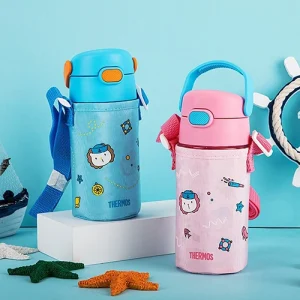
Production of Daily Sports Bottles or Children’s Cups → Prefer PCTG PCTG represents the sweet spot for cost-performance balance in this field. It possesses multiple advantages including being BPA-free, high transparency, drop resistance, and thermal resistance (capable of holding hot water). Representative grades include Eastman Tritan™ TX1001 and SK Chemicals ECOZEN® T110. Both exhibit excellent thermal performance, allowing for flexible selection based on cost control and supply chain strategies.
Production of Baby Bottles or Bottles Requiring Repeated High-Temperature Sterilization → Must Use PPSU PPSU is the inevitable choice under extreme safety requirements. Although the material itself carries a slight amber tint and a higher price tag, its ability to withstand high temperatures above 200°C, repeated steam sterilization, and chemical disinfectants is irreplaceable by other materials. It is recommended to choose brand raw materials with long-term food contact certifications, such as BASF Ultrason® P 3010 or Solvay.
Frequently Asked Questions (FAQ)
Q1: Does there exist a plastic water bottle material that releases absolutely zero chemical substances?
A: From a scientific perspective, when any polymer material is in long-term contact with liquid food, trace amounts of substance migration (including monomers, oligomers, additives, etc.) will theoretically occur. Regulations do not focus on “zero migration”, but rather on whether the migration amount is below the safety limits established via risk assessments. Compliant materials of PPSU, PCTG, and PET can all meet the migration limit requirements of mainstream standards such as the FDA, EU, and GB under normal usage conditions. Manufacturers should request complete migration test reports from raw material suppliers.
Q2: Does “BPA-free” mean absolutely safe? Is PPSU the safest?
A: “BPA-free” is not equivalent to being completely non-toxic. Some studies indicate that alternative bisphenols (such as BPS) may exhibit endocrine-disrupting effects similar to BPA in animal experiments. Therefore, when purchasing “BPA-free” materials like PCTG, it remains necessary to obtain written verification from the supplier stating the absence of BPS and other high-risk bisphenol derivatives. In comparison, because PPSU completely avoids the use of any bisphenol monomers in its molecular structure and has been validated by decades of practical application, it is widely considered the safest and most reliable choice among current plastics for water bottles, particularly suitable for infants and repeated high-temperature sterilization scenarios.
Q3: Apart from raw material prices, what other compliance costs need to be considered when manufacturing water bottles?
A: Testing costs caused by regulatory differences across target markets need to be heavily considered. For example, exporting to the EU market requires comprehensive specific migration and overall migration testing according to EU 10/2011, alongside close attention to the latest bisphenol bans. The US FDA maintains independent compliance sections (21 CFR) based on different plastic types. Some markets will additionally require extra testing for phthalates, heavy metal dissolution, etc. If traditional PC materials are used, entering the EU market may pose the risk of being forced to change formulations. Therefore, prioritizing PCTG or PPSU is recommended to reduce hidden costs brought by cross-market regulatory barriers. Furthermore, ensure packaging integrity during the transport and storage of raw materials to avoid moisture absorption or contamination that could cause the finished product’s migration levels to exceed limits.