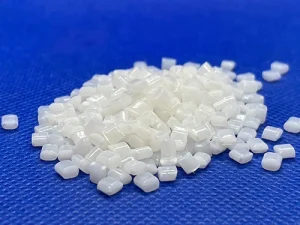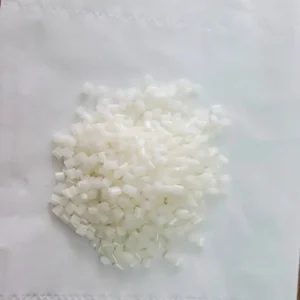
In the world of thermoplastic polymers, few materials are as versatile and widely used as Acrylonitrile Butadiene Styrene, commonly known as ABS. From the bricks of childhood toys to the sleek interior of modern automobiles, ABS plays a pivotal role in global manufacturing.
But what exactly makes this material so special? In this professional guide, we will break down the composition, properties, and industrial applications of ABS resin to help you understand why it is a top choice for your next project.
The Chemistry: What is ABS Made Of?
ABS is a terpolymer, meaning it is synthesized from three distinct monomers. By varying the proportions of these three components, manufacturers can tailor the material’s properties to meet specific industrial needs:
- Acrylonitrile (A): Provides chemical resistance, heat stability, and surface hardness.
- Butadiene (B): A rubbery substance that gives the material its legendary impact resistance and toughness, even at low temperatures.
- Styrene (S): Contributes a glossy finish, excellent processability (making it easy to injection mold), and dimensional stability.
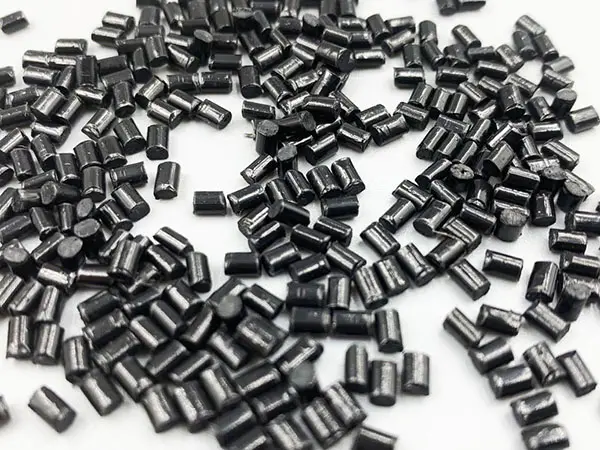
Key Properties of ABS Material
Why do engineers and designers consistently choose ABS? Its popularity stems from a unique balance of mechanical and physical properties:
High Impact Resistance
Thanks to the butadiene component, ABS can withstand significant physical stress and heavy impacts without deforming or breaking.
Excellent Processability
ABS has a relatively low melting point and excellent flow characteristics, making it ideal for Injection Molding and 3D Printing (FDM). It cools quickly and holds its shape with high precision.
Dimensional Stability
Unlike some plastics that shrink or warp significantly after molding, ABS maintains its size and shape extremely well, which is critical for parts that must fit together tightly.
Secondary Processing Capabilities
ABS is one of the best plastics for post-processing. It can be easily:
- Electroplated (to create chrome-like finishes).
- Painted or Printed (excellent adhesion).
- Ultrasonically Welded (joining parts without glue).
Common Industrial Applications
Given its robust nature, ABS is found in almost every sector of modern industry:
- Automotive: Dashboard components, pillar trims, and wheel covers.
- Electronics: Housing for computers, monitors, printers, and keyboard keycaps.
- Household Appliances: Inner liners and frames for refrigerators, vacuum cleaner bodies, and kitchen mixers.
- Construction: Heavy-duty piping (ABS pipes) and protective headgear (safety helmets).
- Consumer Goods: High-quality luggage shells, musical instruments (recorders/plastic clarinets), and building blocks.
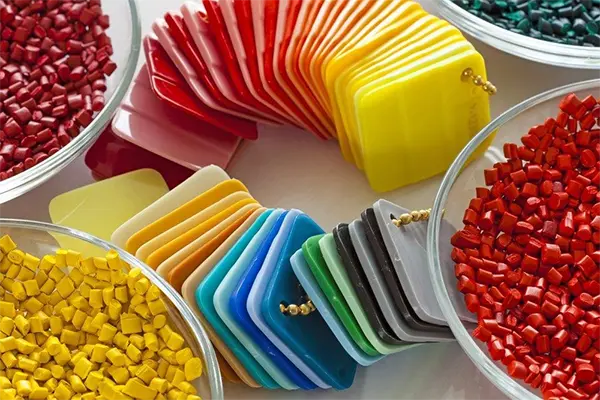
Professional Grade Variations: Standard vs. Transparent ABS
In the professional trade market, not all ABS is the same. While standard ABS is opaque (usually ivory or white), specialized grades offer unique advantages:
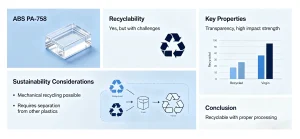
- Transparent ABS (MABS): By adjusting the refractive index and adding specific modifiers, manufacturers produce “Clear ABS.” A prime example is Chimei ABS PA-758, which offers high transparency without sacrificing the impact strength of standard ABS.
- Flame Retardant ABS: Enhanced with additives to meet UL94 V-0 safety standards for electrical housing.
- Heat Resistant ABS: Formulated to withstand higher operating temperatures in automotive engine bays.
Summary: Is ABS Right for You?
If your project requires a material that is tough, easy to mold, and cost-effective, ABS is likely the answer. Its ability to be painted and plated makes it superior for aesthetic products, while its impact strength ensures durability in industrial environments.